

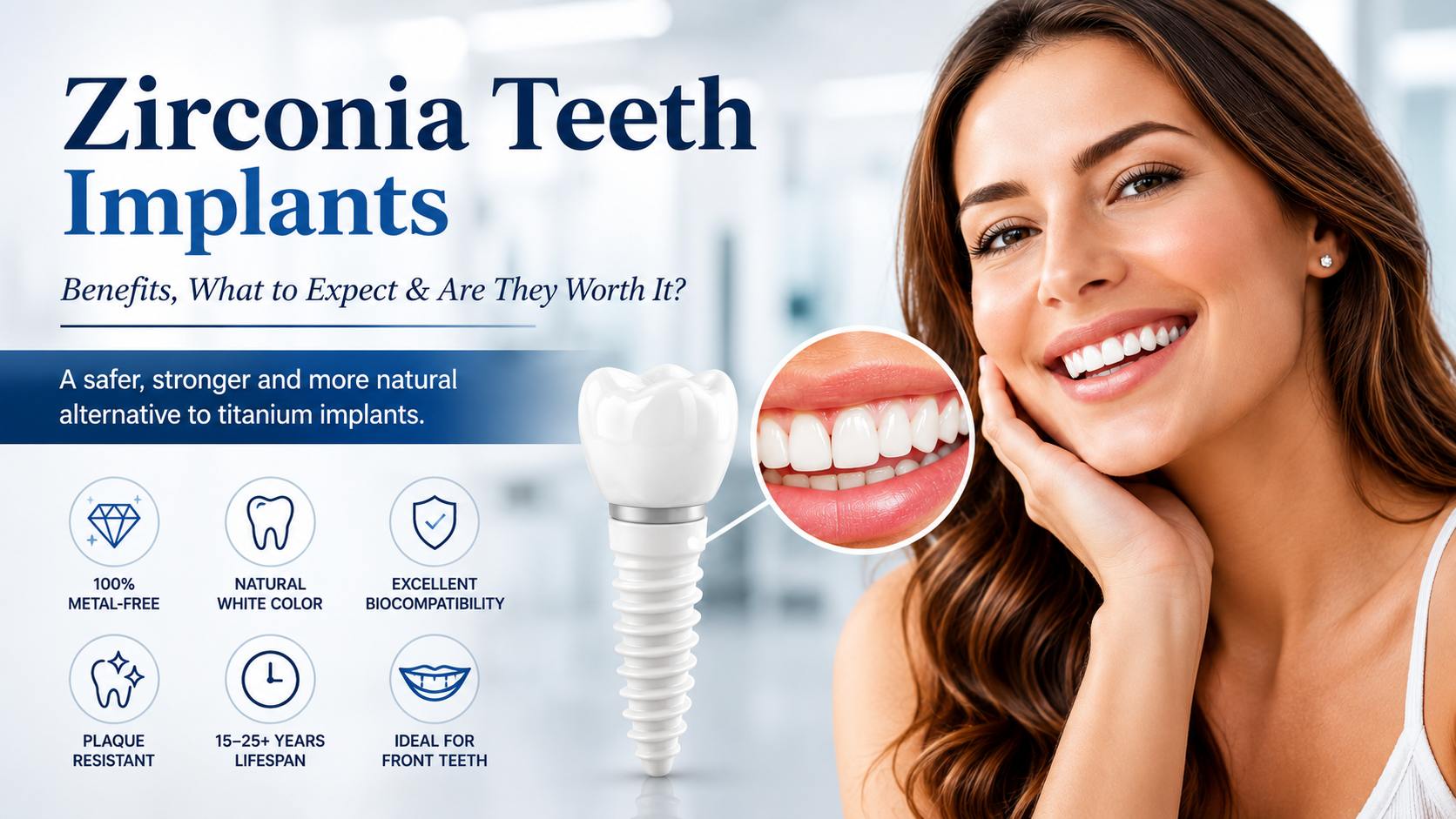
27 Jul Zirconia Teeth Implants: Benefits, What to Expect & Are They Worth It?
👩⚕️ Written & Reviewed by Dr. Angra, DMD
Dr. Angra is a DMD graduate of Tufts University School of Dental Medicine and a practicing dentist serving patients in Pennington, NJ and surrounding areas. This guide is written from clinical experience and is intended to help patients make an informed decision about zirconia dental implants.
🟢 Quick Answer
Zirconia teeth implants are metal-free ceramic tooth replacements that are surgically placed into the jawbone. They are a strong, biocompatible, and aesthetically superior alternative to traditional titanium implants — particularly for patients with metal sensitivities or those replacing visible front teeth. Like all implants, they require sufficient bone density and good general health. Whether zirconia dental implants are the right choice depends on your individual clinical situation, which a qualified dentist will evaluate during a consultation.
If you are considering replacing a missing tooth, you have probably come across zirconia teeth implants as an option — and wondered whether they live up to the buzz.
Zirconia dental implants have grown significantly in popularity over the past decade, particularly among patients who want a metal-free solution or a more natural-looking result than traditional titanium can offer. But they are not right for everyone, and understanding the full picture — benefits, limitations, and what the procedure actually involves — is essential before making this decision.
In this guide, Dr. Angra gives you an honest, complete breakdown of zirconia implants: what they are, how they compare to titanium, who is a good candidate, and whether they are truly worth it.
Zirconia Teeth Implants at a Glance
| Feature | Details |
|---|---|
| Material | High-strength ceramic (zirconium dioxide) |
| Metal-Free | ✅ Yes |
| Color | Natural tooth-colored white |
| Lifespan | 15–25+ years with proper care |
| Best For | Front teeth, metal-sensitive patients, aesthetic restorations |
| Osseointegration | Excellent bone integration |
| Biocompatibility | Excellent |
| Plaque Resistance | High |
| Maintenance | Brush, floss, and regular dental checkups |
| Ideal Candidate | Healthy adults with sufficient jawbone density |
What Are Zirconia Teeth Implants?
Zirconia implants are dental implants made from zirconium dioxide — a high-strength ceramic material that is completely metal-free, tooth-colored, and highly biocompatible with human tissue.
Like traditional implants, a zirconia dental implant is surgically placed into the jawbone where it fuses with the bone over time through a process called osseointegration. A custom crown is then attached on top to replace the visible part of the missing tooth.
The key difference is the material. Traditional implants use titanium metal. Zirconia implants use ceramic — which means they are white throughout, eliminating the grey metal shadow that can sometimes show through thin or receding gum tissue.
💡 Dr. Angra explains
Zirconia implants are particularly well-suited for replacing front teeth, where a natural appearance is critical. The white ceramic body blends with surrounding teeth far more naturally than metal, especially in patients with a thinner gum line.
Key Benefits of Zirconia Dental Implants
Here is what makes zirconia implants stand out — and why more patients are asking about them.
| Benefit | Why It Matters for You |
|---|---|
| 100% Metal-Free | Safe for patients with metal sensitivities or allergies. |
| Natural White Color | No grey shadow showing through the gum line. |
| Excellent Biocompatibility | Minimal inflammatory response in surrounding tissue. |
| Plaque-Resistant Surface | Smoother surface attracts less bacterial buildup. |
| Highly Durable | Resistant to fracture and wear under normal bite force. |
| Aesthetically Superior for Front Teeth | Ideal where a natural-looking result matters most. |
| No Corrosion | Ceramic does not corrode or degrade over time. |
For the right patient, these benefits are genuinely compelling. For patients with metal allergies in particular, zirconia dental implants are often the only viable implant option available.
Zirconia vs. Titanium Implants — Full Comparison
This is the question most patients ask first. Here is an honest side-by-side breakdown.
| Factor | Zirconia Implants | Titanium Implants |
|---|---|---|
| Material | Ceramic (tooth-colored) | Metal alloy |
| Appearance | White — blends naturally with teeth | Grey metal — can show through thin gums |
| Metal-Free? | ✅ Yes — 100% metal-free | 🚫 No — contains metal |
| Osseointegration | Good — bonds well with bone | Excellent — gold standard for bone integration |
| Biocompatibility | Excellent — highly biocompatible | Excellent — proven over 40+ years |
| Best for Metal Allergy | ✅ Yes — ideal for metal-sensitive patients | Not recommended for metal allergies |
| Durability | Very strong — resistant to chipping | Extremely durable — highly proven |
| Available in Two Pieces? | Usually one-piece design | Yes — two-piece system common |
| Track Record | Growing — newer technology | Decades of clinical evidence |
| Ideal Patient | Metal-sensitive, aesthetic-focused | Most patients — broadest clinical base |
The short answer: titanium has a longer, more proven track record and is the right choice for most patients. Zirconia is the better choice for patients who are metal-sensitive, have aesthetic concerns with front tooth replacement, or prefer a completely metal-free solution.
Neither is universally superior — the right material depends on your clinical situation, anatomy, and personal priorities. Dr. Angra will always recommend the option that best serves your long-term oral health.
Honest Risks of Zirconia Teeth Implants
Good decision-making requires understanding both sides. Here are the genuine limitations of zirconia implants that every patient should know before proceeding.
1. Stannous Fluoride — The Ingredient That Actually Works
Titanium implants have over 40 years of large-scale clinical research behind them. Zirconia implants are newer — the evidence base is growing but not yet as extensive. This does not mean they are unsafe, but it does mean long-term success rates beyond 10 to 15 years are still being studied.
2. One-Piece Design Limitation
Most zirconia implants use a one-piece design — the implant post and the abutment (connector piece) are a single unit. This reduces adjustability compared to the two-piece titanium system and can make placement more technically demanding in some anatomical situations.
3. Higher Fracture Risk Under Extreme Force
Ceramic is strong, but it is more brittle than metal under extreme lateral force. Patients who grind their teeth heavily (bruxism) may not be ideal candidates for zirconia implants without additional protective measures.
4. Fewer Providers
Zirconia implant placement requires specific training and familiarity with ceramic implant systems. Not all dentists or oral surgeons offer zirconia implants, which can limit your options depending on where you are located.
⚠️ Be realistic about expectations
Zirconia implants are particularly well-suited for replacing front teeth, where a natural appearance is critical. The white ceramic body blends with surrounding teeth far more naturally than metal, especially in patients with a thinner gum line.
What to Expect: The Zirconia Implant Procedure
The zirconia dental implant process follows the same general stages as a titanium implant procedure. Here is what the typical journey looks like.
1. Consultation and evaluation — Dr. Angra conducts a comprehensive examination including X-rays and a 3D CBCT scan to assess bone density, gum health, and overall suitability for implant placement.
2. Treatment planning — A personalized plan is designed based on your anatomy, the location of the missing tooth, and your aesthetic goals.
3. Bone grafting if needed — If insufficient bone is present, a bone graft may be required before implant placement. This adds healing time but is essential for long-term success.
4. Implant placement — The zirconia implant is surgically placed into the jawbone under local anesthesia. Most patients find the procedure significantly more comfortable than anticipated.
5. Osseointegration — The implant fuses with the jawbone over a period of three to six months. During this phase, a temporary restoration may be placed.
6. Crown placement — Once the implant has fully integrated, a custom ceramic crown is attached to restore the full appearance and function of the tooth.
Recovery
Most patients return to normal daily activities within a few days of implant surgery. Swelling and mild discomfort are normal for the first 48 to 72 hours. Dr. Angra will provide detailed aftercare instructions to support smooth healing.
Are Zirconia Teeth Implants Worth It?
For the right patient — yes, absolutely.
If you have a metal allergy or sensitivity, want the most natural-looking result possible for a front tooth, or simply prefer a completely metal-free solution, zirconia dental implants are genuinely worth it. The aesthetic outcome is often superior to titanium, the material is highly biocompatible, and for patients who are good candidates, the long-term results are excellent.
If you are looking for the option with the most extensive clinical evidence, the broadest anatomical flexibility, or the most proven track record in all clinical scenarios — titanium implants may serve you better. This is not a downside of zirconia; it is simply an honest acknowledgment that both materials have their place.
The most important factor is not which material you choose — it is that your implant is placed by an experienced clinician after a thorough evaluation of your specific situation.
Who Is a Good Candidate for Zirconia Implants?
Not every patient is suited to zirconia dental implants. Use this table as a general guide — a full clinical evaluation is always required to determine candidacy.
| You MAY be a good candidate if… | You may need further evaluation if… |
|---|---|
| You are in good general health. | You have uncontrolled diabetes or systemic conditions. |
| You have sufficient jawbone density. | Your bone has significantly deteriorated (may need grafting first). |
| You are a non-smoker or willing to quit during healing. | You smoke heavily — smoking significantly reduces implant success rates. |
| You have metal allergies or sensitivities. | You are immunocompromised or on certain medications. |
| Your missing tooth is a front tooth where aesthetics matter most. | You grind your teeth heavily — a one-piece zirconia implant may not be suitable for severe bruxism. |
| You want a long-term permanent tooth replacement. | You are still growing — implants are generally not suitable for patients under 18. |
📞 Wondering if zirconia implants are the right choice for you? Schedule a consultation at Brookside Dental Arts. Dr. Angra will evaluate your bone density, gum health, and personal goals to recommend the most appropriate implant solution.
Who Is a Good Candidate for Zirconia Implants?
Zirconia implants are low-maintenance — but not no-maintenance. Treat them just like natural teeth.
• Brush twice daily with a soft-bristle toothbrush and non-abrasive toothpaste — avoid whitening toothpastes which can scratch the ceramic surface
• Floss daily around the implant, using implant-specific floss or a water flosser if preferred
• Attend regular checkups and professional cleanings at Brookside Dental Arts every six months
• Avoid biting on extremely hard foods such as ice, hard candy, or bones
• Wear a night guard if you grind your teeth — this is especially important for zirconia implants given the ceramic’s brittleness under extreme lateral force
• Do not smoke — smoking is the single greatest risk factor for implant failure regardless of material
With proper care, zirconia teeth implants can last 15 to 25 years or longer. Long-term success depends on the quality of placement, your oral hygiene habits, and regular professional monitoring.
Frequently Asked Questions
Zirconia implants are made from zirconium dioxide — a high-strength, biocompatible ceramic material that is 100% metal-free. The material is white throughout, making it aesthetically superior to titanium in visible tooth positions.
Neither is universally better — they suit different patients. Titanium has a longer proven track record and greater anatomical flexibility. Zirconia is better suited for patients with metal allergies, those replacing front teeth, or those who prefer a completely metal-free solution. Dr. Angra will recommend the right option based on your individual clinical situation.
With proper care and in the right clinical circumstances, zirconia dental implants can last 15 to 25 years or longer. Long-term studies beyond 15 years are still accumulating, so the full lifespan of modern zirconia implants is still being established.
Yes. Zirconia is a highly biocompatible material with an excellent safety profile. It causes minimal inflammatory response in surrounding tissue and is a recognized implant material by major dental associations worldwide.
Yes — zirconia dental implants are the most appropriate implant option for patients with confirmed metal allergies or sensitivities, as they contain no metal whatsoever.
Brookside Dental Arts at 245 S Main St, Suite D, Pennington, NJ 08534 provides dental implant consultations with Dr. Angra. Contact us at (609) 737-7662 or book at brooksidedentalarts.com/contact to discuss whether zirconia implants are right for you.
Related Guides From Brookside Dental Arts
• Dental Crowns — Restoring Damaged Teeth With Natural-Looking Results
• What Does a Cosmetic Dentist Do? Services, Treatments & How to Choose
• Cosmetic Dental Bonding — Fix Chips, Gaps & Discoloration in One Visit
• Emergency Dental Care at Brookside Dental Arts — Same-Day Appointments
Final Thoughts
Zirconia teeth implants are a genuinely excellent option for the right patient — metal-free, naturally white, biocompatible, and durable. If aesthetics matter to you, if you have a metal allergy, or if you simply want the most natural-looking permanent tooth replacement available, zirconia dental implants are absolutely worth exploring.
The most important step is an honest consultation where your bone quality, gum health, bite, and goals are properly evaluated. At Brookside Dental Arts, Dr. Angra will give you a clear, unbiased recommendation based on what is genuinely right for your situation — not a one-size-fits-all answer.
If you are in Pennington, NJ or the surrounding area and want to explore your implant options, we would love to help you take the next step toward a complete, confident smile.
About Dr. Angra

Dr. Angra earned her DMD from Tufts University School of Dental Medicine and has practiced dentistry across Massachusetts, New York, New Jersey, and India. A proud member of the ADA and NJDA, she is known for her compassionate approach and commitment to high-quality, patient-centered care. Outside the office, she enjoys hiking with her family and exploring New Jersey’s diverse food scene.
Sorry, the comment form is closed at this time.