

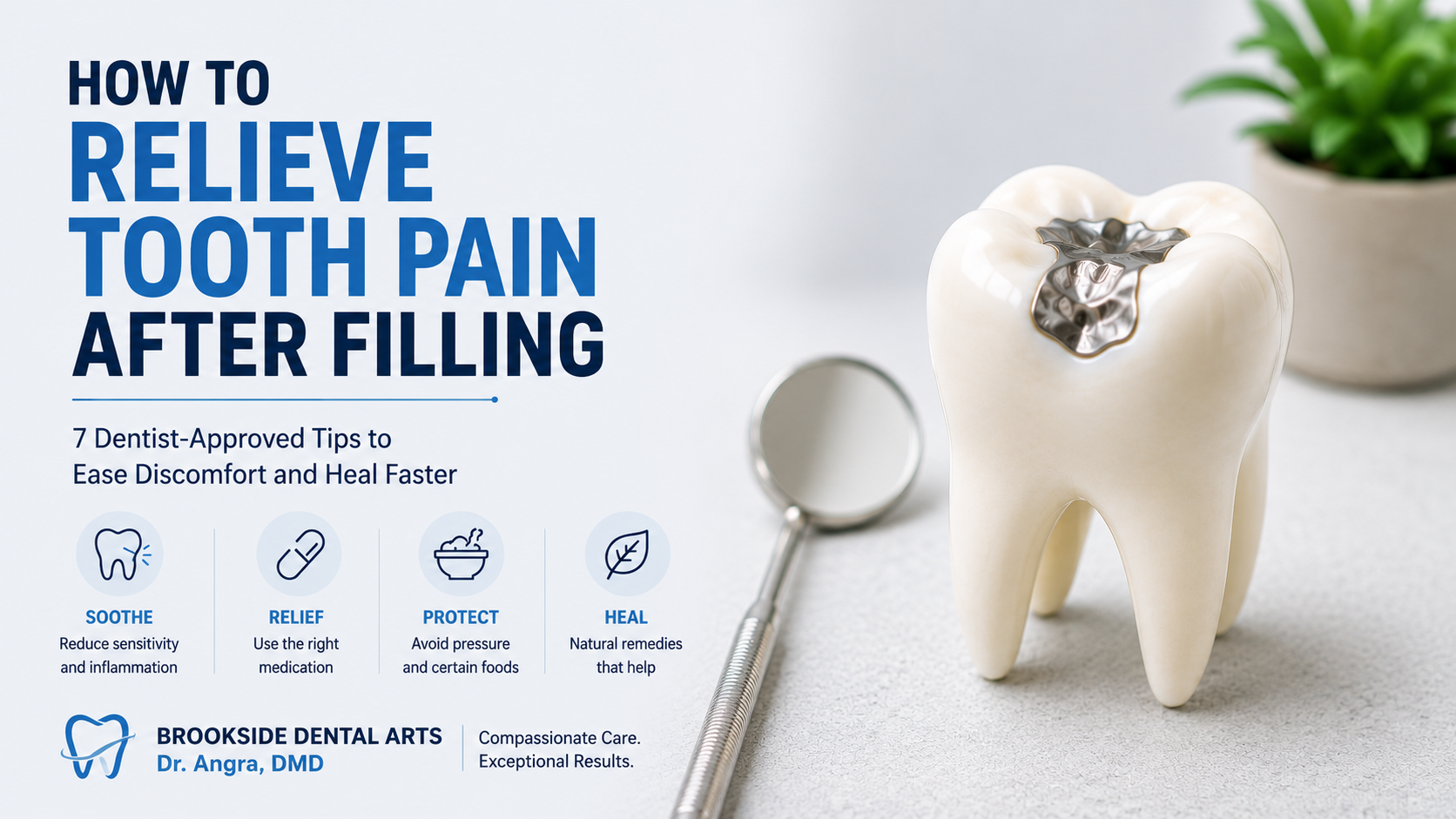
19 May How to Relieve Tooth Pain After Filling: 7 Dentist-Approved Tips
🟢 Quick Answer
To relieve tooth pain after a filling, rinse with warm salt water, take over-the-counter anti-inflammatory medication, avoid chewing on the treated side, and apply a clove oil compress for temporary numbing. If pain persists beyond two weeks or worsens, contact your dentist — it may indicate a bite issue, nerve irritation, or a filling that needs adjustment.
Knowing how to relieve tooth pain after a filling can make the recovery process significantly more comfortable. A mild ache or sensitivity in the hours and days following a dental filling is completely normal — your tooth has just undergone a procedure, and the surrounding tissues need time to settle. For most patients, this discomfort fades on its own within a few days.
However, the experience varies. Some patients feel only a slight twinge when eating or drinking something cold, while others experience a sharper, more persistent ache that disrupts eating and sleep. The good news is that several simple, dentist-approved strategies can meaningfully reduce post-filling discomfort while your tooth heals.
At Brookside Dental Arts, Dr. Angra routinely walks patients through aftercare guidance following filling procedures. In this article, she shares seven practical tips to help you manage tooth pain after a filling, along with important guidance on when at-home care is enough — and when it is time to call the office.
Why Does Your Tooth Hurt After a Filling?
Before diving into relief strategies, it helps to understand why post-filling pain happens in the first place. During a filling procedure, your dentist removes decayed tooth structure, cleans the area, and places a restoration material — all of which can temporarily irritate the nerve endings inside the tooth and the surrounding tissue.
Common reasons for post-filling sensitivity include:
- Tooth nerve sensitivity from the drilling process or depth of the cavity
- Pulp inflammation (pulpitis) if the cavity was close to the inner nerve
- A slightly high bite where the filling sits above the level of surrounding teeth
- The bonding agent or composite resin causing temporary chemical sensitivity
- Gum tissue irritation from the dental dam, retractor, or instruments used during the procedure
Understanding the cause matters because most of these resolve naturally within days. If yours does not, one of the tips below — or a quick follow-up visit — will typically set things right.
7 Dentist-Approved Tips to Relieve Tooth Pain After a Filling
Tip 1: Rinse with Warm Saltwater
A warm saltwater rinse is one of the most time-tested and effective home remedies for oral discomfort. Salt draws out excess fluid from inflamed tissue, reduces bacterial activity in the mouth, and gently cleanses the area around the new filling without causing irritation.
How to do it: Dissolve half a teaspoon of table salt in eight ounces of warm (not hot) water. Swish gently around the affected side for 30 seconds, then spit. Repeat three to four times daily, especially after meals. This is safe to do as often as needed and is suitable for patients of all ages.
💡 Pro tip: To relieve tooth pain after a filling, rinse with warm salt water, take over-the-counter anti-inflammatory medication, avoid chewing on the treated side, and apply a clove oil compress for temporary numbing. If pain persists beyond two weeks or worsens, contact your dentist — it may indicate a bite issue, nerve irritation, or a filling that needs adjustment.
Tip 2: Take Anti-Inflammatory Pain Relief
Over-the-counter non-steroidal anti-inflammatory drugs (NSAIDs) such as ibuprofen (Advil, Motrin) are particularly effective for post-filling discomfort because they address both pain and the underlying inflammation simultaneously. Unlike acetaminophen (Tylenol), which only masks pain signals, NSAIDs actively reduce swelling in the tissue around the tooth.
How to do it: Take ibuprofen as directed on the packaging, ideally starting before the anesthesia fully wears off so you stay ahead of the discomfort. If you cannot take ibuprofen due to a medical condition, acetaminophen is a reasonable alternative — consult your physician if you are unsure which is appropriate for you.
| ⚠️ Important: Do not exceed the recommended dosage and do not place aspirin directly against gum tissue — this can cause a chemical burn to the soft tissue. Always take pain relief orally as directed. |
Tip 3: Avoid Chewing on the Treated Side
The filled tooth is in a period of adjustment. Even when the anesthesia wears off and it feels usable, chewing on it — especially on hard, sticky, or crunchy foods — puts unnecessary mechanical pressure on both the new restoration and the surrounding tissue. This can intensify sensitivity and, in cases where the bite is slightly off, worsen the discomfort significantly.
What to do: For the first 24 to 48 hours after your filling, consciously chew on the opposite side of your mouth. Stick to soft foods like yogurt, mashed potatoes, soup, eggs, and smoothies. Avoid hard bread, raw vegetables, tough meat, ice, or anything sticky like caramel or gum.
Tip 4: Apply a Clove Oil Compress
Clove oil contains eugenol, a naturally occurring compound that acts as both a mild anesthetic and an antibacterial agent. It has been used in dentistry for over a century and is still found in many professional dental preparations today. Applied topically, it can temporarily numb the area around a sensitive tooth and provide meaningful short-term relief.
How to do it: Dilute two to three drops of clove oil in one teaspoon of carrier oil (such as coconut or olive oil). Soak a small cotton ball in the mixture and gently press it against the gum area near the filled tooth for 10 to 15 minutes. Do not swallow. Repeat up to twice daily as needed.
💡 Note: Always dilute clove oil before applying to oral tissue. Undiluted clove oil can irritate or burn sensitive gum tissue. If you experience any burning sensation, remove the cotton immediately and rinse with water.
Tip 5: Use Desensitizing Toothpaste
Desensitizing toothpastes contain compounds such as potassium nitrate or stannous fluoride that work by blocking the microscopic tubules in exposed dentin — the pathways through which temperature and pressure stimuli travel to the nerve. Used consistently, they can significantly reduce sensitivity over the course of one to two weeks.
How to do it: Replace your regular toothpaste with a desensitizing formula such as Sensodyne, Colgate Sensitive, or a fluoride-rich prescription toothpaste recommended by Dr. Angra. Brush gently using a soft-bristle brush twice daily. Some patients also find relief by applying a small amount of the paste directly to the sensitive tooth and leaving it in place for a few minutes before rinsing.
Desensitizing toothpaste works cumulatively, so results build over several days of consistent use rather than providing instant relief. Pair it with other strategies on this list for the best outcome.
Tip 6: Elevate Your Head While Sleeping
Tooth pain — particularly the throbbing variety — often feels worse when lying flat because the horizontal position increases blood pressure around the inflamed tooth. Many patients notice their discomfort peaks at bedtime or during the night, which can be both uncomfortable and sleep-disrupting.
How to do it: Use an extra pillow or a wedge pillow to keep your head slightly elevated when sleeping for the first few nights after your filling. This simple adjustment reduces blood pooling around the tooth and can noticeably reduce the intensity of nighttime aching. Avoid sleeping on the side of the treated tooth if possible.
Tip 7: Go Back for a Bite Adjustment If Needed
If you have followed every home care tip and the tooth is still hurting — particularly when you bite down — the most likely explanation is that your filling is sitting slightly too high. This is one of the most common causes of persistent post-filling pain, and it is one of the easiest to fix.
contact Brookside Dental Arts for a follow-up — bite adjustments are a standard, no-stress part of filling aftercare.
Quick Reference: What to Do and What to Avoid
Here is a summary of the most important do’s and don’ts for managing tooth sensitivity after a filling.
| ✅ DO This | ❌ AVOID This |
|---|---|
| Rinse with warm salt water 3–4x daily | Eating hard, crunchy, or sticky foods |
| Take ibuprofen as directed for inflammation | Chewing on the side of the filled tooth |
| Use a soft-bristle toothbrush near the area | Drinking very hot or cold liquids initially |
| Apply clove oil (diluted) for temporary relief | Ignoring pain that lasts beyond 2 weeks |
| Sleep with your head slightly elevated | Grinding or clenching your teeth |
| Call your dentist if pain worsens | Using aspirin directly on gum tissue |
📞 Is your post-filling pain not improving — or getting worse? Don’t wait it out. Contact the Brookside Dental Arts team for a quick evaluation. Whether you need a bite adjustment or something more, Dr. Angra will get you comfortable as quickly as possible. Book your visit at brooksidedentalarts.com/contact
How Long Should Tooth Pain Last After a Filling?
This is one of the most frequently asked questions Dr. Angra hears from patients after a filling appointment. The honest answer is: it depends on the depth and size of the cavity, the type of filling material used, and your individual nerve sensitivity.
As a general guide:
- Mild sensitivity to temperature or pressure: normal for up to 1–2 weeks
- Slight aching or tenderness when biting: normal for up to 1 week
- Pain that peaks on day 2–3 then gradually improves: a normal healing curve
- Pain that stays the same or worsens after 2 weeks: requires evaluation
- Sharp, spontaneous, or throbbing pain at any point: contact your dentist
Deeper fillings — those placed close to the dental pulp — tend to cause more pronounced and longer-lasting sensitivity than shallow ones. If your dentist mentioned during your appointment that the cavity was deep or close to the nerve, a longer healing period is to be expected.
When to Call Your Dentist
The tips in this guide are appropriate for normal, manageable post-filling sensitivity. However, there are clear situations where home care is not enough and professional evaluation is needed promptly.
- Pain that worsens progressively after the first few days rather than improving
- Throbbing or pulsating pain, especially at night or when lying down
- Sharp pain when biting that has not resolved within two weeks
- Sensitivity to hot temperatures that lingers for 30 seconds or more after removing the stimulus
- Visible swelling in the gum, jaw, or cheek near the treated tooth
- A bad taste or persistent bad breath that developed after your filling
- The filling feels high, cracked, or like it has shifted
what causes filling pain after months in our related guide.
Related Dental Concerns We Can Help With
If you are experiencing other dental issues alongside post-filling sensitivity, the following resources from Brookside Dental Arts may be helpful:
- Tooth filling pain after months — causes and solutions
- Emergency dental care for sudden or severe tooth pain
- Root canal treatment — when a filling is no longer enough
- Dental fillings — types, materials, and what to expect
How to Prevent Excessive Pain After Future Fillings
While some sensitivity after a filling is unavoidable, there are steps you can take before and after your appointment to minimize discomfort during recovery.
- Start taking ibuprofen one hour before your appointment if your dentist approves — this pre-emptive approach reduces the inflammatory response before it begins.
- Let your dentist know before the procedure if you have had significant sensitivity after fillings in the past, so they can take extra care around the pulp.
- Begin warm saltwater rinses the evening of your appointment rather than waiting until pain develops.
- Switch to a desensitizing toothpaste at least one week before a planned filling appointment to pre-condition the tooth nerve.
- Attend regular checkups so cavities are caught and filled while they are still small — shallower fillings cause significantly less post-operative sensitivity.
FAQ
Pain when biting down after a filling may indicate a high filling, cracked tooth, nerve irritation, or inflammation inside the tooth. A dentist can evaluate the cause and adjust or replace the filling if necessary.
Mild sensitivity after a filling usually improves within a few days to two weeks. Pain that worsens or lasts longer may require evaluation by your dentist.
Mild soreness can be normal, but severe throbbing pain may indicate nerve inflammation, infection, or a bite issue that requires dental attention.
Final Thoughts
Knowing how to relieve tooth pain after a filling puts you in control of your recovery. A combination of warm saltwater rinses, anti-inflammatory medication, soft foods, clove oil compresses, and desensitizing toothpaste will resolve most cases of post-filling sensitivity within a week or two. Elevating your head at night and avoiding the treated side while eating can make the healing period significantly more comfortable.
If your pain persists beyond two weeks, worsens over time, or is accompanied by swelling or throbbing, that is the signal to stop waiting and call your dentist. At Brookside Dental Arts, Dr. Angra and the team are always here to ensure your comfort and the long-term health of your smile — whether that means a quick bite adjustment or a more thorough evaluation.
📍 Schedule your visit: Contact Brookside Dental Arts at brooksidedentalarts.com/contact to book with Dr. Angra. Same-day evaluation available for patients experiencing significant post-filling discomfort.
About Dr. Angra

Dr. Angra earned her DMD from Tufts University School of Dental Medicine and has practiced dentistry across Massachusetts, New York, New Jersey, and India. A proud member of the ADA and NJDA, she is known for her compassionate approach and commitment to high-quality, patient-centered care. Outside the office, she enjoys hiking with her family and exploring New Jersey’s diverse food scene.
Sorry, the comment form is closed at this time.