

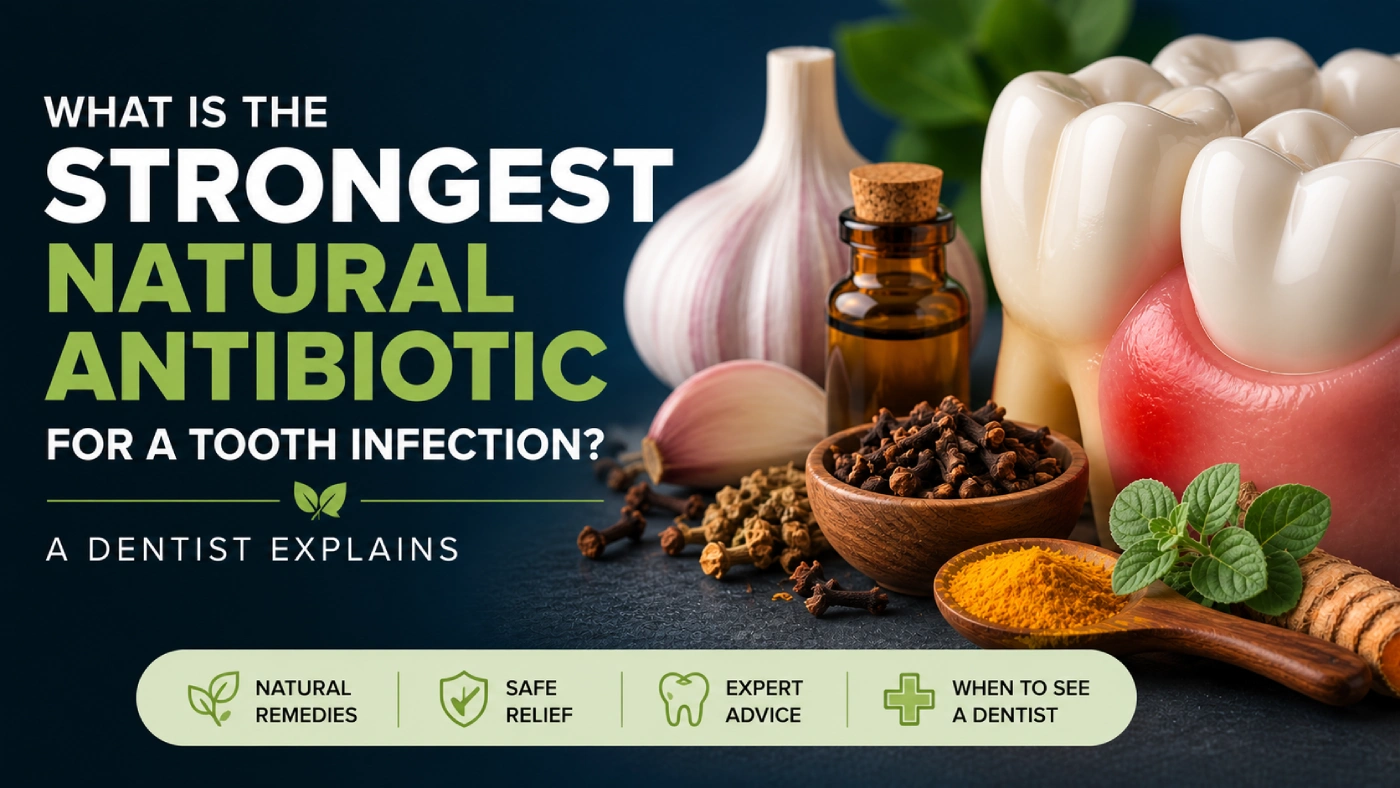
05 May What Is the Strongest Natural Antibiotic for Tooth Infection? A Dentist Explains
By Dr. Angra, DMD — Brookside Dental Arts
Garlic is often considered the strongest natural antibiotic for tooth infection because it contains allicin, a compound with powerful antibacterial and anti-inflammatory properties. Other commonly used natural remedies include clove oil, saltwater rinses, oregano oil, and turmeric. While these remedies may temporarily reduce pain and bacteria, they do not replace professional dental treatment for an active infection.
A tooth infection occurs when bacteria enter the inner pulp of the tooth, causing inflammation, pain, swelling, and sometimes pus formation. Many people search for natural ways to relieve symptoms at home before visiting a dentist.
If you are wondering, “What is the strongest natural antibiotic for tooth infection?”, it is important to understand that natural remedies may help manage discomfort temporarily, but they cannot completely remove a serious dental infection. In many cases, professional treatment such as drainage, antibiotics, or a root canal may still be necessary.
Top Natural Remedies for Tooth Infection
- Garlic
- Clove Oil
- Oregano Oil
- Saltwater Rinse
- Turmeric
Important Safety Note: Natural remedies may temporarily relieve pain and inflammation, but a tooth infection can spread if left untreated. Severe infections may require urgent dental care
Understanding a Tooth Infection: What’s Actually Happening?
A tooth infection, also known as a dental abscess, occurs when bacteria invade the inner pulp of the tooth — the soft tissue containing nerves and blood vessels. This typically happens due to:
- Untreated tooth decay that allows bacteria to reach the pulp
- A cracked or fractured tooth that creates an entry point for bacteria
- Advanced gum disease that damages the structures supporting the tooth
- A previous dental procedure that did not fully address the underlying issue
Once bacteria enter the pulp, the body mounts an immune response, often causing significant inflammation, pain, and the formation of pus. Without treatment, the infection can spread to surrounding bone, soft tissue, and in rare but serious cases, to other areas of the body.
| ⚠️ Important: Natural remedies can ease discomfort and temporarily slow bacterial activity, but they cannot eliminate a deep dental infection. If you suspect an abscess or notice swelling, fever, or difficulty swallowing, seek dental care immediately. |
The Strongest Natural Antibiotics for a Tooth Infection
Several natural substances have been studied for their antibacterial and anti-inflammatory properties. Here are the most effective options, along with how to use them responsibly.
1. Garlic (Allium sativum)
Garlic is widely regarded as one of nature’s most powerful antibiotics. When fresh garlic is crushed or chewed, it releases allicin — a sulfur-containing compound with well-documented antibacterial and antifungal activity. Research shows that allicin can inhibit several bacteria commonly associated with oral infections, including Streptococcus mutans and Porphyromonas gingivalis.
How to use it: Crush one fresh garlic clove to activate the allicin. Apply the paste gently to the affected area and leave it for two to three minutes before rinsing thoroughly with warm water. Repeat up to twice daily.
Note: Raw garlic can irritate sensitive gum tissue, so avoid prolonged contact and always dilute if needed.
2. Clove Oil (Eugenia caryophyllata)
Clove oil has been used in dentistry for centuries, and for good reason. Its active compound, eugenol, acts as both a natural anesthetic and an antibacterial agent. It can temporarily numb pain around the infected tooth while helping to limit bacterial growth in the surrounding tissue.
How to use it: Dilute two to three drops of clove oil in a teaspoon of carrier oil such as coconut or olive oil. Apply the mixture to a cotton ball and gently press it against the affected tooth and gum for up to fifteen minutes. Do not swallow clove oil.
Note: Undiluted clove oil can damage soft tissue. Always dilute before applying to the mouth.
3. Oregano Oil (Origanum vulgare)
Oregano oil contains two potent antimicrobial compounds — carvacrol and thymol — that have been shown to fight a broad spectrum of bacteria. Some research suggests oregano oil may be effective against certain antibiotic-resistant bacterial strains, making it one of the strongest plant-based antibacterial options available.
How to use it: Dilute one to two drops of oregano oil in a tablespoon of carrier oil. Apply with a clean cotton swab to the affected area. You can also add it to a saltwater rinse for a broader antibacterial effect.
Note: Oregano oil is highly concentrated and should never be used undiluted in the mouth. It is not safe for use during pregnancy.
4. Turmeric (Curcuma longa)
Turmeric has been valued in traditional medicine for its anti-inflammatory and antimicrobial properties. Its active component, curcumin, has been shown to inhibit bacterial growth and reduce oral inflammation. While it may not be as potent as garlic or clove oil for direct antibacterial action, turmeric is excellent for calming swollen, irritated gum tissue around an infected tooth.
How to use it: Mix one teaspoon of turmeric powder with a small amount of water to form a paste. Apply directly to the affected area and allow it to sit for five minutes before rinsing. You can also mix turmeric with coconut oil for a soothing antibacterial paste.
Note: Turmeric stains surfaces easily, including teeth, countertops, and fabric. Rinse thoroughly after use.
5. Saltwater Rinse
A warm saltwater rinse is one of the simplest and most effective home remedies for a tooth infection. Salt creates a hypertonic environment that draws fluid out of inflamed tissue, reducing swelling and flushing bacteria from the area. It also promotes minor wound healing in the gum tissue.
How to use it: Dissolve half a teaspoon of table salt in eight ounces of warm water. Swish gently around the affected side of the mouth for thirty seconds, then spit. Repeat three to four times daily.
Note: Saltwater rinses are safe for most people and can be used frequently throughout the day. They are particularly gentle and suitable even for sensitive mouths.
6. Tea Tree Oil (Melaleuca alternifolia)
Tea tree oil is a well-known natural antiseptic with broad-spectrum antibacterial properties. Studies have demonstrated its effectiveness against common oral pathogens, making it a useful addition to your home care routine during a tooth infection.
How to use it: Add one to two drops of tea tree oil to a glass of water and use it as a mouth rinse. Do not swallow. Alternatively, dilute in a carrier oil and apply with a cotton swab to the affected area.
Note: Tea tree oil is toxic if ingested. Use only as a rinse or topical application, and never swallow.
7. Hydrogen Peroxide Rinse
A diluted hydrogen peroxide rinse can help reduce bacteria in the mouth, loosen debris around the infected area, and provide mild antibacterial and antifungal effects. It has been used in dentistry for years as a gentle antiseptic rinse.
How to use it: Mix equal parts of three percent hydrogen peroxide with water. Swish gently for thirty seconds and spit out completely. Do not swallow. Use once daily as needed.
Note: Use only three percent food-grade hydrogen peroxide. Higher concentrations can damage oral tissue.
How to Use Natural Remedies Safely
Natural remedies can be a helpful bridge between the onset of symptoms and your dental appointment. To use them safely and effectively, keep the following principles in mind:
✔️ Always dilute essential oils before applying them to oral tissues
✔️ Do not swallow any essential oils — they are toxic if ingested
✔️ Use these remedies as temporary relief, not as a substitute for dental treatment
✔️ Monitor your symptoms closely. If they worsen or you develop fever or swelling, seek urgent dental care
✔️ Avoid placing any strong substances directly against a tooth with an open cavity or exposed nerve
When Natural Remedies Are Not Enough
Natural antibiotics can provide meaningful short-term relief, but there are clear situations where professional dental treatment is essential — and delay can lead to serious complications.
You should contact your dentist or seek urgent dental care if you experience any of the following:
- Persistent or worsening tooth pain that does not respond to home remedies
- Visible swelling in the gum, jaw, cheek, or neck
- Fever above 101°F, which may indicate a spreading infection
- Difficulty swallowing or opening your mouth
- A foul or persistent bad taste in the mouth, which may indicate a draining abscess
- Sensitivity to hot or cold that lingers after the stimulus is removed
Dental infections can spread to the jaw, neck, and in rare but life-threatening cases, to the airway or bloodstream. This is not a situation where waiting is advisable.
If you’re experiencing swelling or severe pain, contact our dental team immediately for urgent care.
| 💻 Dr. Angra’s Note: I always encourage patients to call our office at the first sign of a tooth infection. Even if we can’t see you the same day, we can help triage your situation and advise whether you need urgent care. |
Natural Remedies vs Dental Treatment
When dealing with a tooth infection, it’s important to understand the difference between temporary relief and a permanent solution. Natural remedies can help manage symptoms for a short time, but they do not eliminate the source of the infection.
Dental treatment, on the other hand, targets the root cause and provides long-term relief. Choosing the right approach at the right time can prevent complications and protect your oral health.
Here’s how they compare:
Natural Remedies
- Provide temporary pain relief
- May reduce bacteria on the surface
- Help control inflammation
- Do not remove infection from inside the tooth
- Risk of symptoms returning or worsening
Professional Dental Treatment
- Eliminates the source of infection
- Provides permanent or long-term relief
- Prevents spread to surrounding tissues
- Protects the natural tooth structure
- Reduces risk of serious complications
While natural options can be helpful initially, they should not replace professional dental care when an infection is present.
Professional Treatment Options for Tooth Infections
When you visit Brookside Dental Arts for a tooth infection, Dr. Angra will thoroughly evaluate the affected tooth and surrounding structures to determine the most appropriate course of treatment.
Common professional treatments include:
- Root Canal Therapy: The infected pulp is carefully removed, the canals are cleaned and disinfected, and the tooth is sealed and restored. This is the most common and effective way to save an infected tooth.
- Antibiotic Prescription: In cases where the infection is spreading or systemic, prescription antibiotics such as amoxicillin or clindamycin may be prescribed alongside dental treatment.
- Tooth Extraction: If the tooth is too severely damaged to save, extraction followed by a replacement option such as a dental implant may be recommended.
- Abscess Drainage: If a dental abscess has formed, it may need to be carefully drained by the dentist to relieve pressure and remove infected material.
The goal is always to address the source of the infection — not just the symptoms — to protect your long-term oral and systemic health.
In many cases, a root canal treatment is required to remove the infection completely and save the natural tooth.
Preventing Tooth Infections
The best strategy for dealing with a tooth infection is to prevent one from developing in the first place. Good oral hygiene and regular professional care are your strongest defenses.
✅ Brush your teeth at least twice daily with fluoride toothpaste
✅ Floss daily to remove plaque and food debris from between teeth and along the gumline
✅ Schedule regular checkups and professional cleanings at Brookside Dental Arts
✅ Address tooth decay early — small cavities are far easier and less costly to treat than infections
✅ Wear a mouthguard if you grind your teeth, as grinding can cause cracks that allow bacteria to enter
✅ Avoid excessive sugar and acidic beverages that contribute to enamel erosion and decay
Final Thoughts
Natural antibiotics like garlic, clove oil, oregano oil, and turmeric can provide real, temporary relief from tooth infection symptoms. They work by reducing bacterial activity, calming inflammation, and easing pain while you await professional care. Used correctly, they are a safe and reasonable first step.
However, they are not a cure. A tooth infection will not resolve on its own, and delaying treatment can allow the infection to deepen and spread. If you are experiencing tooth pain or signs of infection, please don’t wait.
At Brookside Dental Arts, Dr. Angra is committed to providing compassionate, personalized dental care to help you achieve and maintain a healthy smile. Whether you need urgent treatment for a tooth infection or want to prevent future issues, we are here to help.
| Schedule Your Visit: Contact Brookside Dental Arts today at brooksidedentalarts.com contact to book a consultation with Dr. Angra. Your comfort and oral health are our top priority. |
FAQs
Garlic is commonly considered the strongest natural antibiotic for tooth infection because of its antibacterial compound called allicin. However, natural remedies only provide temporary relief and do not replace professional dental treatment.
No. A tooth infection will not usually go away on its own. While natural remedies may temporarily reduce pain or inflammation, professional dental treatment is typically required to remove the infection completely.
Warm saltwater rinses may help reduce swelling and clean the affected area temporarily, but they do not remove a deep dental infection. Persistent pain or swelling should always be evaluated by a dentist.
You should see a dentist immediately if you experience swelling, severe pain, fever, difficulty swallowing, or a bad taste in the mouth. These symptoms may indicate the infection is spreading.
About Dr. Angra

Dr. Angra earned her DMD from Tufts University School of Dental Medicine and has practiced dentistry across Massachusetts, New York, New Jersey, and India. A proud member of the ADA and NJDA, she is known for her compassionate approach and commitment to high-quality, patient-centered care. Outside the office, she enjoys hiking with her family and exploring New Jersey’s diverse food scene
Latest Posts


Sorry, the comment form is closed at this time.