

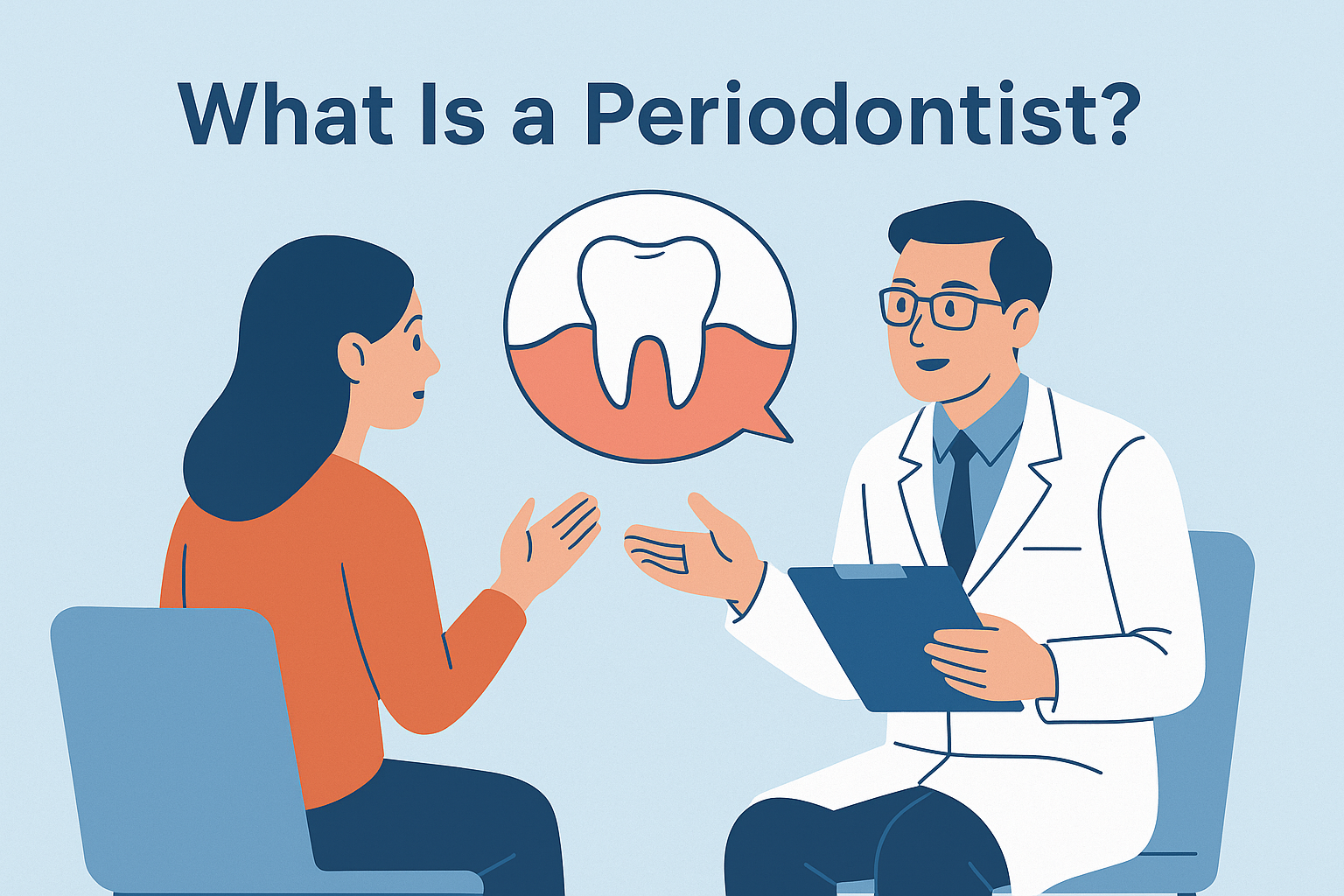
13 Oct What Is a Periodontist? Definition, Types & Difference Between Periodontist vs Dentist
Healthy gums are the foundation of a strong, lasting smile. While general dentists focus on overall oral health, there are times when you may need the help of a gum specialist. That’s where a periodontist comes in. But what exactly is a periodontist, and how is this dental specialist different from a general dentist?
This guide will explain what periodontics is, define the role of a periodontist, outline the types of treatments they provide, and highlight the differences between a periodontist vs dentist.
What Is Periodontics?
Periodontics is a specialized branch of dentistry that focuses on the prevention, diagnosis, and treatment of gum disease as well as the placement of dental implants. It deals with the tissues that support the teeth, including:
- Gums (gingiva)
- Alveolar bone (jawbone)
- Periodontal ligament (connective tissue holding teeth in place)
- Cementum (the surface covering the tooth root)
When these supporting structures become infected or damaged, periodontics provides advanced treatment to restore gum health and protect teeth.
Define Periodontist: What Is a Periodontist?
A periodontist is a dentist who has completed additional years of specialized training beyond dental school to become an expert in diagnosing and treating gum disease, performing gum surgeries, and placing dental implants.
In short, if a general dentist is your primary oral health provider, a periodontist is the gum specialist who steps in when issues become more complex.
What Does a Periodontist Do?
Many people wonder: What do periodontists do that dentists don’t?
Here’s a breakdown of the treatments and services a periodontist provides:
- Gum Disease Treatment
- Treating early-stage gingivitis and advanced periodontitis.
- Scaling and root planing (deep cleaning beneath the gums).
- Antibiotic therapies to control infection.
- Treating early-stage gingivitis and advanced periodontitis.
- Gum Surgery
- Pocket reduction surgery to remove bacteria and infected tissue.
- Gum grafts to restore receding gums.
- Crown lengthening procedures.
- Pocket reduction surgery to remove bacteria and infected tissue.
- Dental Implants
- Surgical placement of dental implants.
- Bone grafting when there is insufficient jawbone to support implants.
- Surgical placement of dental implants.
- Aesthetic Gum Treatments
- Correcting a “gummy smile” with contouring.
- Restoring even gum lines for cosmetic improvement.
- Correcting a “gummy smile” with contouring.
- Maintenance and Prevention
- Periodontal maintenance cleanings every 3–4 months for patients with a history of gum disease.
- Monitoring bone and gum health long-term.
- Periodontal maintenance cleanings every 3–4 months for patients with a history of gum disease.
In summary, periodontists are gum specialists who handle advanced cases of gum disease and procedures involving the supporting structures of teeth.
Types of Periodontal Treatments
Depending on your needs, periodontics may involve:
- Non-surgical treatments: Deep cleaning, scaling and root planing, antibiotics.
- Surgical treatments: Gum flap surgery, gum grafts, pocket reduction.
- Regenerative procedures: Bone grafts, tissue regeneration techniques.
- Implant dentistry: Placing and restoring missing teeth with implants.
Periodontist vs Dentist: What’s the Difference?
While both dentists and periodontists care for oral health, their roles are different.
| General Dentist | Periodontist |
| Provides routine checkups, cleanings, and fillings | Specializes in gum health and supporting structures |
| Focuses on cavities, enamel health, and general care | Focuses on gum disease, implants, and surgical treatments |
| Refers complex gum cases to specialists | Provides advanced care for gum disease and implants |
| Your first point of contact for dental issues | The specialist you see when gum problems become severe |
Simply put: A dentist cares for your overall oral health, while a periodontist is a gum specialist with advanced training in treating diseases of the gums and bone.
When Should You See a Periodontist?
Your dentist may refer you to a periodontist if you experience:
- Gums that bleed easily when brushing or flossing
- Persistent bad breath or bad taste in the mouth
- Gum recession or teeth appearing longer
- Loose teeth or shifting bite
- Deep pockets around teeth (detected during exams)
- The need for dental implants or bone grafting
If these symptoms are ignored, gum disease can progress to tooth loss and even affect overall health. Early referral to a periodontist ensures the best outcomes.
Why Periodontics Is Important
Gum health is just as important as tooth health. Gum disease has been linked not only to tooth loss but also to conditions like heart disease, diabetes, and stroke.
A periodontist doesn’t just restore oral health—they also help protect your overall well-being. With advanced skills in both medical and surgical treatments, periodontists provide care that general dentistry alone cannot always address.
Periodontist Care at Brookside Dental Arts
At Brookside Dental Arts, Dr. Angra and his skilled team provide advanced care in periodontics alongside general dentistry. Whether you need preventive treatment, gum surgery, or dental implants, you’ll receive personalized, expert care in a comfortable setting.
If you’ve noticed signs of gum disease or are looking for a gum specialist, schedule a consultation with Brookside Dental Arts today and take the first step toward healthier gums and a stronger smile.



Sorry, the comment form is closed at this time.