

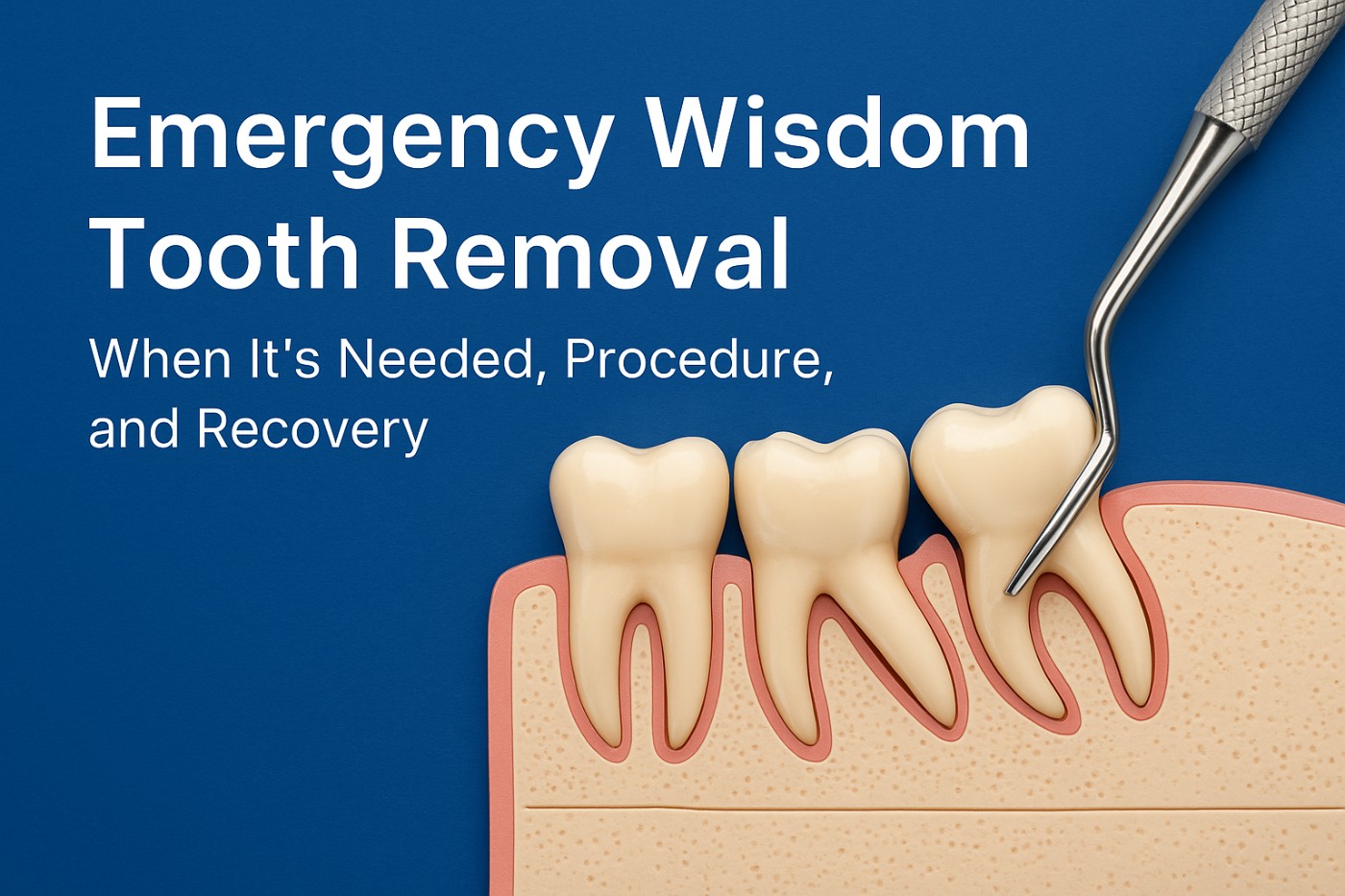
30 Sep Emergency Wisdom Tooth Removal: When It’s Needed, Procedure, and Recovery
Wisdom teeth, also known as third molars, usually appear in the late teens or early twenties. For some people, they grow normally and cause no problems. For many others, however, wisdom teeth can become impacted or infected, leading to pain, swelling, and urgent dental concerns. In these cases, emergency wisdom tooth removal may be the only way to relieve discomfort and protect oral health.
This guide explains when emergency removal is necessary, how the procedure works, and what recovery looks like in the days that follow.
When Is Emergency Wisdom Tooth Removal Needed?
Not every wisdom tooth needs extraction right away. But certain symptoms can signal that urgent care is required.
Common reasons include:
- Severe pain in the back of the mouth that does not improve with medication
- Swelling in the gums, jaw, or face
- Infection caused by bacteria trapped around a partially erupted tooth
- Impacted wisdom teeth that press against nearby molars
- Bleeding or difficulty opening the mouth
- Damage to surrounding teeth from crowding or pressure
Delaying treatment can make the condition worse, leading to serious infections, abscesses, or bone damage. If you’re searching for emergency wisdom tooth removal near me, it means your symptoms likely need urgent attention.
Impacted Wisdom Teeth and Why They’re a Problem
One of the most common causes of emergency wisdom teeth extractions is impaction.
An impacted wisdom tooth happens when the tooth doesn’t have enough room to emerge properly. This can result in:
- A tooth trapped under the gums or jawbone
- A tooth growing at an angle and pressing into neighboring teeth
- Partially erupted teeth that allow food and bacteria to collect, causing infection
Removal of impacted teeth is often more complex than standard extractions, but it prevents ongoing pain, swelling, and further complications.
How Do They Take Out Wisdom Teeth?
The method for extraction depends on whether the tooth has erupted or is impacted.
Simple Extraction
✅ Used when the wisdom tooth has fully erupted.
✅ The dentist numbs the area with local anesthesia.
✅ The tooth is gently loosened and pulled out.
Surgical Extraction
✅ Necessary for impacted wisdom tooth removal.
✅ Local anesthesia (and sometimes sedation) is given.
✅ The dentist or oral surgeon makes a small incision in the gums.
✅ Bone covering the tooth may be removed, and the tooth may be sectioned into smaller pieces for easier removal.
✅ The site is cleaned and stitched for healing.
✅ Whether it’s a straightforward extraction or a surgical procedure, emergency care ensures fast relief from pain and infection.
Wisdom Tooth Extraction Recovery
Recovery varies depending on whether the removal was simple or surgical, but most patients heal within one to two weeks.
First 24 Hours
✅ Expect bleeding and mild swelling.
✅ Bite gently on gauze to help a clot form.
✅ Avoid rinsing or spitting forcefully.
2nd Day of Wisdom Teeth Removal
✅ Swelling and discomfort may increase slightly.
✅ Cold compresses can help reduce swelling.
✅ Stick to soft foods like yogurt, mashed potatoes, or smoothies. For detailed meal options, check our guide:What to Eat After Wisdom Teeth Removal.
3rd Day of Wisdom Teeth Removal
✅ Pain usually begins to decrease.
✅ Continue using over-the-counter pain relievers as directed.
✅ Warm saltwater rinses may be introduced if advised by your dentist.
1 Week After
✅ Stitches (if used) may dissolve or be removed by your dentist.
✅ Most swelling subsides, and normal activities can resume.
Complete Healing
✅ Gum tissue usually heals within 2 weeks.
✅ Bone and deeper tissues continue healing for several weeks longer.
✅ For a full breakdown of the healing timeline, visit our article: Wisdom Teeth Removal Recovery: What to Expect & How Long It Really Takes.
Wisdom Teeth After Removal: What to Expect
After your wisdom teeth are removed, it’s normal to experience mild pain, swelling, and limited jaw movement for a few days. Here’s what you may notice:
- Mild pain and swelling for the first 48–72 hours, gradually easing afterward.
- Bruising along the jawline, which fades within a week.
- Tightness in the jaw that improves as healing progresses.
- Slight bleeding or oozing during the first 24 hours.
- Temporary bad breath or unusual taste due to healing tissue.
The most important thing is to allow the surgical site to heal undisturbed. Disturbing the blood clot can cause a painful complication called dry socket. Follow your dentist’s instructions carefully to minimize risks.
In terms of food, avoid hard or crunchy meals until your gums are fully healed. For a complete guide on safe food choices after surgery, see: What to Eat After Tooth Extraction: Best & Worst Foods.
Aftercare Tips for Wisdom Tooth Extraction
Proper aftercare is essential for smooth healing and to prevent infection. Here’s what dentists typically recommend:
1. Rest well – Take it easy for the first 24–48 hours. Physical strain can dislodge the clot.
2. Cold compresses – Apply ice packs intermittently during the first day to reduce swelling.
3. Manage pain carefully – Over-the-counter medications such as ibuprofen or acetaminophen help with soreness. Your dentist may prescribe stronger medication if needed.
4. Stick to soft foods – Soups, mashed potatoes, scrambled eggs, and smoothies are ideal. Avoid seeds, nuts, or anything crunchy that could irritate the site.
5. Stay hydrated – Drink plenty of water, but avoid using straws for at least a week since suction can dislodge the clot.
6. Rinse gently – Use warm saltwater rinses starting 24 hours after the procedure to soothe the gums and keep the mouth clean.
7. Avoid smoking and alcohol – These interfere with healing and increase the risk of infection.
8. Keep up with oral hygiene – Continue brushing and flossing, but avoid the extraction site for the first few days.
Healing usually progresses quickly if aftercare instructions are followed. By the third day, many patients feel much more comfortable, and by the second week, most daily activities can be resumed without concern.
How Much Is a Wisdom Tooth Extraction?
The cost of wisdom teeth removal varies depending on:
- Whether the extraction is simple or surgical
- How many teeth are being removed
- The complexity of impaction
- The dentist’s experience and location
- Insurance coverage
Some dental offices advertise services like $99 tooth extraction for simple cases, but impacted or surgical removals are typically more involved. For accurate costs, it’s best to schedule a consultation with your dentist.
FAQ about Emergency Wisdom Tooth Removal
1. When is emergency wisdom tooth removal necessary?
Emergency removal is needed if you experience severe pain, swelling, infection, or difficulty opening your mouth. Impacted wisdom teeth or pressure on nearby molars are also common reasons for urgent extraction.
2. How do dentists remove wisdom teeth in an emergency?
The method depends on whether the tooth is erupted or impacted. Erupted teeth are removed with a simple extraction, while impacted teeth may require a surgical procedure with a small incision and stitches.
3. Does wisdom tooth extraction hurt?
No. The procedure is done under local anesthesia, and in some cases sedation is provided. You may feel pressure, but not pain. Mild swelling or discomfort afterward is normal and managed with medication.
4. How long does it take to recover from wisdom tooth removal?
Most patients recover in 1–2 weeks. Swelling peaks within the first 48 hours, then gradually decreases. By the third day, pain usually improves. Full gum healing takes about 2 weeks, while deeper tissues may take longer.
5. What can I eat after emergency wisdom tooth removal?
Stick to soft foods such as yogurt, mashed potatoes, soups, and smoothies for the first few days. Avoid crunchy, spicy, or seed-like foods that can irritate the surgical site. For detailed guidance, see our post: What to Eat After Wisdom Teeth Removal.
Same Day and Emergency Wisdom Tooth Removal
When pain or infection strikes suddenly, many clinics offer emergency wisdom tooth extraction near me or even same day wisdom tooth extraction.
Dentists that remove wisdom teeth urgently can:
- Relieve pain quickly
- Prevent infection from spreading
- Protect surrounding teeth from damage
If you’re experiencing swelling, severe pain, or difficulty eating or speaking, seeking emergency removal of wisdom teeth is the safest option.
Emergency Wisdom Tooth Removal at Brookside Dental Arts
At Brookside Dental Arts, Dr. Angra and the team provide safe, effective care for patients in need of urgent wisdom tooth extractions. Whether it’s an impacted tooth, sudden infection, or unbearable pain, emergency appointments and same-day procedures are available to bring quick relief.
With compassionate care and a focus on patient comfort, you’ll receive clear guidance before, during, and after the procedure—ensuring a smooth recovery and lasting oral health.
📞 Contact Brookside Dental Arts today for emergency wisdom tooth removal and protect your smile from further complications.



Sorry, the comment form is closed at this time.