


12 Nov Gum Recession: Causes, Signs, How to Stop It, Surgery & Treatment
Introduction
Healthy gums are the foundation of a confident smile. However, when gum tissue starts pulling away from the teeth, it can expose the roots—leading to sensitivity, discomfort, and even tooth loss. This condition, known as gum recession, often develops slowly but can cause lasting damage if ignored.
At Brookside Dental Arts, NJ, our goal is to help you identify the early signs of gum disease and treat receding gums before they compromise your oral health.
What Is Gum Recession?
Gum recession (or receding gums) occurs when the gum line gradually wears away or detaches from the tooth surface, exposing more of the root structure. As the protective gum tissue diminishes, teeth may appear longer and become more sensitive to temperature changes and touch.
Once the gums recede, they cannot naturally regenerate. However, modern dental care offers highly effective gum recession treatments to stop progression and restore a healthy, balanced gum line.
What Causes Gum Recession?
Gum recession doesn’t occur overnight — it develops due to a combination of factors that weaken gum attachment and bone support. Understanding these causes is the first step toward prevention.
- Gum Disease (Periodontitis): The most common cause of gum recession is gum disease, a bacterial infection that destroys gum tissue and bone. Plaque buildup hardens into tartar, creating inflammation that breaks the bond between gums and teeth. Over time, this deepens gum pockets, leading to tissue loss and exposure of tooth roots.
- Poor Oral Hygiene: Skipping brushing or flossing allows bacteria to thrive beneath the gum line. Even mild neglect can trigger early gum inflammation (gingivitis), which, if untreated, can advance into periodontitis and recession.
- Aggressive Brushing or Abrasive Toothpaste: While good oral hygiene is essential, brushing too hard or using abrasive toothpaste can wear down enamel and irritate gum tissue, causing it to pull away. Switching to a soft-bristled toothbrush and gentle brushing technique can prevent this.
- Tobacco Use: Smoking or vaping restricts blood flow and weakens the body’s ability to heal. Nicotine exposure leads to gum dryness and a higher likelihood of infection, accelerating receding gums.
- Genetics and Thin Gum Tissue: Some people inherit thinner or more delicate gum tissue, making them more prone to gum loss even with good oral hygiene.
- Hormonal Fluctuations: Hormonal changes during pregnancy, menopause, or puberty can make gums more sensitive and reactive to bacteria.
- Teeth Grinding (Bruxism) and Misalignment: Constant pressure or misaligned teeth can cause gums to recede unevenly, especially in localized areas. Treating grinding with a nightguard or correcting bite issues can help preserve gum structure.
- Oral Piercings or Dental Trauma: Jewelry rubbing against gum tissue or repeated trauma from improper dental work can also lead to localized gum recession.
Each of these factors can be addressed with preventive care, professional cleaning, and timely dental visits.
Early Signs and Symptoms of Receding Gums
Recognizing early signs can prevent long-term complications. Watch for:
- Tooth sensitivity or pain while brushing
- Teeth appearing longer or uneven
- Swollen, red, or bleeding gums
- Bad breath despite brushing
- Loose teeth or gum line notching
If you notice any of these, consult your dentist before it progresses into gum disease or bone loss.
Stages of Gum Recession and Gum Disease Progression
Gum recession doesn’t occur overnight — it develops gradually and often parallels the stages of gum disease (periodontal disease). Recognizing these stages helps you take timely action and protect your smile before irreversible damage occurs.
1. Gingivitis (Early Stage)
This is the earliest warning stage of gum disease and often the starting point of gum recession.
Key signs and changes:
- Mild inflammation and redness along the gum line
- Bleeding while brushing or flossing
- Bad breath due to plaque buildup
- No visible gum loss yet — gums can still fully recover with proper care
2. Early Periodontitis
Inflammation starts spreading deeper beneath the gum line, affecting the tissues that support your teeth.
What happens at this stage:
- Formation of small “pockets” between teeth and gums
- Early gum tissue detachment begins
- Tooth sensitivity may start near the gum line
- Slight gum recession may be visible on some teeth
3. Moderate Periodontitis
At this stage, gum and bone tissue loss become noticeable and permanent without treatment.
Typical signs include:
- Deeper gum pockets harboring more bacteria
- Gum line visibly pulling away from teeth
- Tooth roots may become exposed
- Teeth may begin shifting or feeling slightly loose
- Professional gum recession treatment or deep cleaning is crucial
4. Severe Periodontitis
This stage represents advanced tissue destruction and significant gum recession.
Symptoms to watch for:
- Teeth appear longer due to exposed roots
- Persistent bad breath or bad taste in the mouth
- Pain or pus discharge from the gum line
- Teeth may become unstable or sensitive
- Gum graft surgery or regenerative therapy may be required
5. Advanced Periodontal Disease
The final and most critical stage, where extensive gum and bone loss occur.
At this point:
- Teeth are extremely loose or may already be lost
- Gums recede significantly, exposing most tooth roots
- Chewing may become painful or difficult
- Severe infection can affect overall oral health
- Immediate periodontal treatment is essential to save remaining teeth
How to Stop Gum Recession from Getting Worse
While gum recession cannot reverse on its own, adopting proper oral care habits can effectively stop it from worsening.
✅Adopt a Gentle Brushing Technique: Use a soft-bristled toothbrush and small circular motions to clean your teeth without damaging gum tissue. Avoid horizontal scrubbing or high pressure. Your dentist can demonstrate the correct technique to protect delicate gum margins.
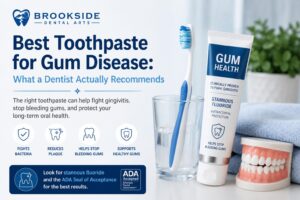
✅Choose the Right Toothpaste: Use fluoride toothpaste for gum disease or one formulated for sensitive teeth. Fluoride helps strengthen enamel, reduce root sensitivity, and protect against decay in exposed areas.
✅Daily Flossing and Mouthwash Rinsing: Flossing once daily removes plaque between teeth that brushing misses. Rinse with an antibacterial mouthwash to reduce bacteria and inflammation.
✅Schedule Professional Dental Cleanings: Regular cleanings every six months allow your dentist to remove tartar buildup and check for early signs of gum disease or receding gums.
✅Quit Smoking or Vaping: Quitting tobacco products significantly improves gum blood flow and healing capacity. Within weeks, you’ll notice reduced bleeding and improved gum color.
✅Treat Bruxism (Teeth Grinding): Wearing a custom night guard can prevent gum and enamel wear caused by clenching or grinding, protecting both teeth and supporting structures.
✅Maintain a Balanced Diet: Foods rich in Vitamin C, D, and Omega-3s support gum repair and immune function. Stay hydrated to keep saliva flowing and bacteria under control.
✅Follow Dentist-Recommended Fluoride Treatments: Professional fluoride treatments near you can strengthen weakened enamel and reduce root sensitivity, helping gums stay healthy longer.
Preventive habits combined with routine dental visits form the cornerstone of maintaining healthy gums and stopping further gum recession.
Proven Treatments for Gum Recession
If gum recession has already progressed, several effective treatment options can restore your gum health, comfort, and aesthetics.
1. Deep Cleaning (Scaling & Root Planing)
This non-surgical treatment is the first step in halting gum disease and recession. The dentist removes plaque and tartar from below the gum line, smoothing the tooth roots to encourage gum reattachment. This deep cleaning minimizes bacteria buildup and promotes healing.
2. Topical Fluoride and Desensitizing Treatments
For mild cases or after cleaning, fluoride varnishes or gels are applied to strengthen exposed roots and reduce tooth sensitivity. Over-the-counter fluoride products help maintain these results at home.
3. Laser Therapy
Laser-assisted therapy precisely removes diseased tissue and kills bacteria while stimulating healthy tissue regeneration. It’s minimally invasive, reduces bleeding, and shortens recovery time compared to traditional surgery.
4. Gum Graft Surgery
When significant gum tissue loss occurs, gum graft surgery is the gold standard. In this procedure, tissue is taken from the roof of your mouth or a donor source and grafted to the affected area. This covers exposed roots, restores natural contours, and prevents further gum and bone loss.
5. Pinhole Surgical Technique
This innovative, minimally invasive technique repositions existing gum tissue through tiny entry points—no stitches required. Healing is faster, and results are highly aesthetic.
6. Dental Bonding
For small areas of gum loss, a tooth-colored composite resin can be bonded to the exposed root surface. This camouflages the area, reduces sensitivity, and restores comfort without surgery.
7. Orthodontic Correction
When misaligned teeth contribute to recession, orthodontics can reposition them, relieving stress on the gums and allowing for natural reattachment and improved function.
8. Regenerative Procedures
In severe cases of gum disease, regenerative treatments using bone grafts or tissue membranes can rebuild lost bone support around teeth, improving overall gum stability.
Can Gums Grow Back?
A common question is — “Do gums grow back naturally?” Unfortunately, gum tissue doesn’t regenerate on its own once it’s receded. However, professional gum recession treatments can restore protection and appearance through grafting or laser-assisted procedures.
Maintaining consistent oral hygiene and regular dental visits helps preserve your results and prevent further gum loss.
What’s the Best Toothpaste for Gum Recession?
Choosing the right toothpaste is vital for maintaining gum health. Look for:
- Fluoride Toothpaste for Gum Disease: Strengthens enamel and minimizes root sensitivity.
- Desensitizing Toothpaste (e.g., Potassium Nitrate-based): Helps block pain signals from exposed roots.
- Low-Abrasive Formulas: Gentle on gums while effectively removing plaque.
Your dentist may recommend brands like Sensodyne Repair & Protect, Parodontax, or Colgate Sensitive Pro-Relief, depending on your condition.
When Should You See a Dentist?
If you notice any signs of gum recession, don’t wait until discomfort becomes severe. Seek dental care immediately if you experience:
- Persistent gum bleeding or swelling
- Sensitivity that lingers after brushing
- Visible root exposure or teeth appearing longer
- Shifting teeth or bite changes
- Pain or discomfort while eating
Early diagnosis allows your dentist to address the root cause — whether it’s gum disease, misalignment, or improper brushing technique — and recommend a personalized gum recession treatment plan before irreversible damage occurs.
FAQs: Expert Answers on Gum Recession
1. How is Gum Recession Diagnosed?
Dentists diagnose gum recession through a clinical examination and periodontal probing to measure gum pocket depth. In some cases, digital X-rays are taken to evaluate bone loss beneath the gum line.
2. How Can I Reduce Sensitivity from Gum Recession?
Use desensitizing or fluoride toothpaste daily, avoid acidic foods, and schedule professional fluoride varnish treatments. Your dentist may also apply bonding material to cover exposed roots.
3. How Long Does It Take to Recover from Gum Graft Surgery?
Most patients recover within 1–2 weeks. During this time, soft foods and gentle oral care are recommended. Complete tissue integration may take up to six weeks for optimal results.
4. Is Gum Recession Curable?
While gum recession isn’t reversible on its own, it’s manageable and treatable. With deep cleaning, grafting, or laser therapy, you can restore gum health and protect your teeth long-term.
5. How Can I Heal Receding Gums Faster?
Follow a consistent oral care routine, avoid tobacco, use fluoride mouthwash, and maintain regular professional cleanings. Your dentist may also suggest regenerative procedures if advanced tissue loss exists.
Expert Insight from Brookside Dental Arts, NJ
At Brookside Dental Arts, Dr. Angra combines precision dentistry with advanced periodontal techniques to restore gum health and aesthetics.
Here’s what makes our gum recession treatments exceptional:
- Comprehensive Evaluation: We identify underlying causes such as gum disease, grinding, or misalignment.
- Minimally Invasive Treatments: From deep cleaning to laser therapy, our goal is to preserve your natural gum tissue.
- Advanced Grafting Methods: Tailored grafting solutions ensure long-term stability and a natural look.
- Comfort-Focused Care: Gentle procedures with detailed aftercare for smooth recovery.
Final Thoughts
Gum recession is not just a cosmetic concern—it’s a sign your gums need attention. By recognizing early signs of receding gums, maintaining good oral hygiene, and seeking professional gum recession treatment, you can preserve your smile for years to come.
At Brookside Dental Arts, NJ, Dr. Angra and his team provide personalized care using the latest gum graft surgery and preventive methods to protect both your teeth and confidence.
Your smile deserves precision, protection, and expertise.
Schedule your consultation today and discover how we can help you restore a healthy, beautiful gum line for life.

Sorry, the comment form is closed at this time.