

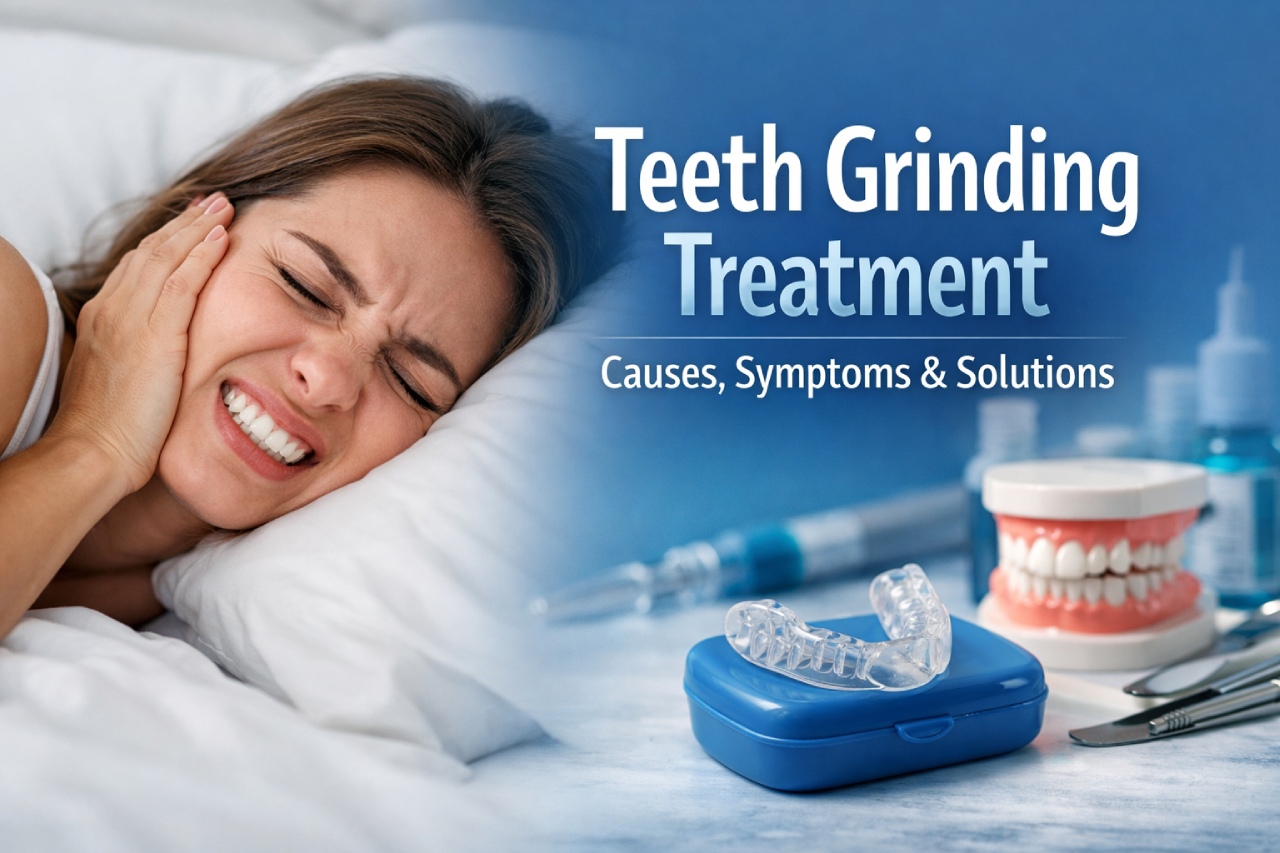
26 Mar Teeth Grinding Treatment: Causes, Symptoms & Best Solutions
Do you wake up with jaw pain, headaches, or sensitive teeth? You might be dealing with teeth grinding, also known as bruxism — a common yet often unnoticed condition that can quietly damage your smile over time.
Understanding the right teeth grinding treatment is essential before it leads to serious issues like worn enamel, jaw disorders, or chronic discomfort.
At Brookside Dental Arts, we focus on identifying the root cause and providing personalized, effective solutions to protect your teeth and improve your quality of life.
What Causes Teeth Grinding?
Finding the cause is the first step toward choosing the best teeth grinding treatment. Bruxism is usually triggered by a mix of physical, emotional, and lifestyle factors.
1. Stress and Anxiety
Stress is the #1 cause. Many people grind their teeth subconsciously, especially during sleep.
2. Sleep Disorders
Conditions like sleep apnea can increase nighttime grinding due to disrupted breathing patterns.
3. Bite Misalignment
An uneven bite forces your jaw to adjust, leading to grinding over time.
4. Lifestyle Habits
High intake of caffeine, alcohol, smoking, or even late-night screen time can worsen bruxism.
5. Medications & Neurological Factors
Certain antidepressants and neurological conditions may trigger involuntary grinding.
Common Symptoms That Need Teeth Grinding Treatment
Early signs are often ignored — but catching them early can prevent serious damage.
- Worn, chipped, or flattened teeth
- Tooth sensitivity
- Jaw pain or stiffness
- Morning headaches
- Ear pain (without infection)
- Clicking or popping jaw (TMJ issues)
- Poor sleep or fatigue
⚠️ If you notice these symptoms, it’s time to act.
Effective Teeth Grinding Treatment Options
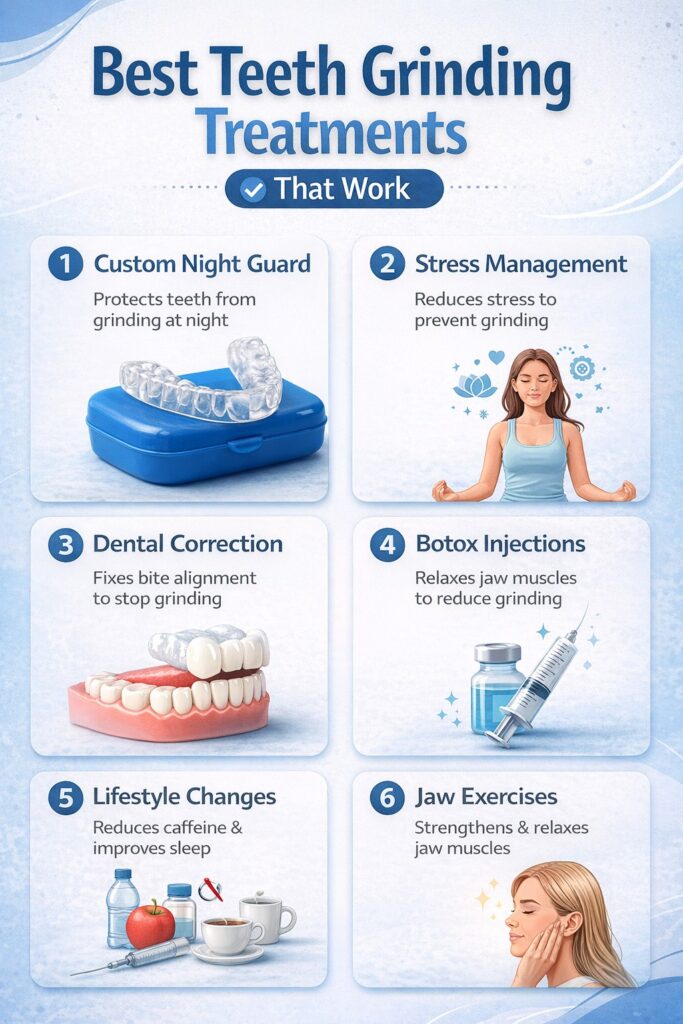
We combine modern dentistry with proven techniques to deliver long-term relief.
🦷 1. Custom Night Guards (Most Effective Solution)
A professionally designed night guard protects your teeth while you sleep.
Benefits:
- Prevents tooth damage
- Reduces jaw pressure
- Improves sleep quality
👉 Custom guards are far more effective than store-bought options.
🧘 2. Stress Management & Behavioral Therapy
Since stress is a major trigger, managing it can significantly reduce grinding.
Best Techniques:
- Meditation & mindfulness
- Cognitive Behavioral Therapy (CBT)
- Deep breathing exercises
- Yoga
😁 3. Dental Correction & Bite Alignment
If misalignment is the cause, corrective treatments can fix the issue permanently.
Options Include:
- Braces or clear aligners
- Occlusal adjustments
- Dental bonding or crowns
💉 4. Botox for Severe Bruxism
For chronic cases, Botox helps relax overactive jaw muscles.
Why it works:
- Reduces grinding intensity
- Prevents muscle strain
- Provides long-lasting relief
🍽️ 5. Lifestyle Changes That Make a Big Difference
Small daily habits can significantly improve your condition.
- Reduce caffeine & alcohol
- Avoid chewing gum
- Maintain a proper sleep routine
- Stay hydrated
💪 6. Jaw Exercises & Physical Therapy
Strengthening and relaxing your jaw muscles can relieve tension.
- Gentle stretching exercises
- Facial muscle massage
- Warm compress therapy
💊 7. Medications (Short-Term Relief)
In some cases, doctors may prescribe:
- Muscle relaxants
- Anti-anxiety medications
- Sleep aids
👉 These are temporary solutions and work best alongside other treatments.
What Happens If You Ignore Teeth Grinding?
Untreated bruxism can lead to serious complications:
- Permanent enamel loss
- Broken or loose teeth
- TMJ disorders
- Chronic facial pain
- Poor sleep quality
- Expensive dental procedures
⚠️ The longer you wait, the worse it gets.
How Dentists Diagnose Teeth Grinding
At Brookside Dental Arts, we use advanced techniques to ensure accurate diagnosis:
- Dental examination for wear patterns
- Jaw movement analysis
- Sleep studies (if needed)
👉 A proper diagnosis leads to a targeted and effective teeth grinding treatment plan.
Prevent Teeth Grinding Before It Starts
Prevention is just as important as treatment.
Daily Habits That Help:
- Regular dental check-ups
- Stress management routines
- Consistent use of night guards
- Healthy diet and hydration
Choosing the Right Teeth Grinding Treatment
There’s no one-size-fits-all solution. The best results come from a personalized approach.
Ideal Treatment Plan Includes:
- Night guards
- Stress management
- Lifestyle changes
- Professional dental care
At Brookside Dental Arts, we create customized plans tailored to your needs for long-term relief.
Frequently Asked Questions (FAQs)
Q1. What is the fastest teeth-grinding treatment?
A custom night guard provides immediate protection and relief, especially for nighttime grinding.
Q2. Can teeth grinding go away on its own?
Mild cases may improve, but most require treatment and lifestyle changes.
Q3. Is teeth grinding dangerous?
Yes, untreated bruxism can lead to tooth damage, jaw disorders, and chronic pain.
Q4. Are home remedies effective for teeth grinding?
They can help manage symptoms, but professional treatment ensures long-term results.
Q5. How do I stop grinding my teeth at night?
Use a night guard, reduce stress, and maintain a consistent sleep routine.

Sorry, the comment form is closed at this time.