

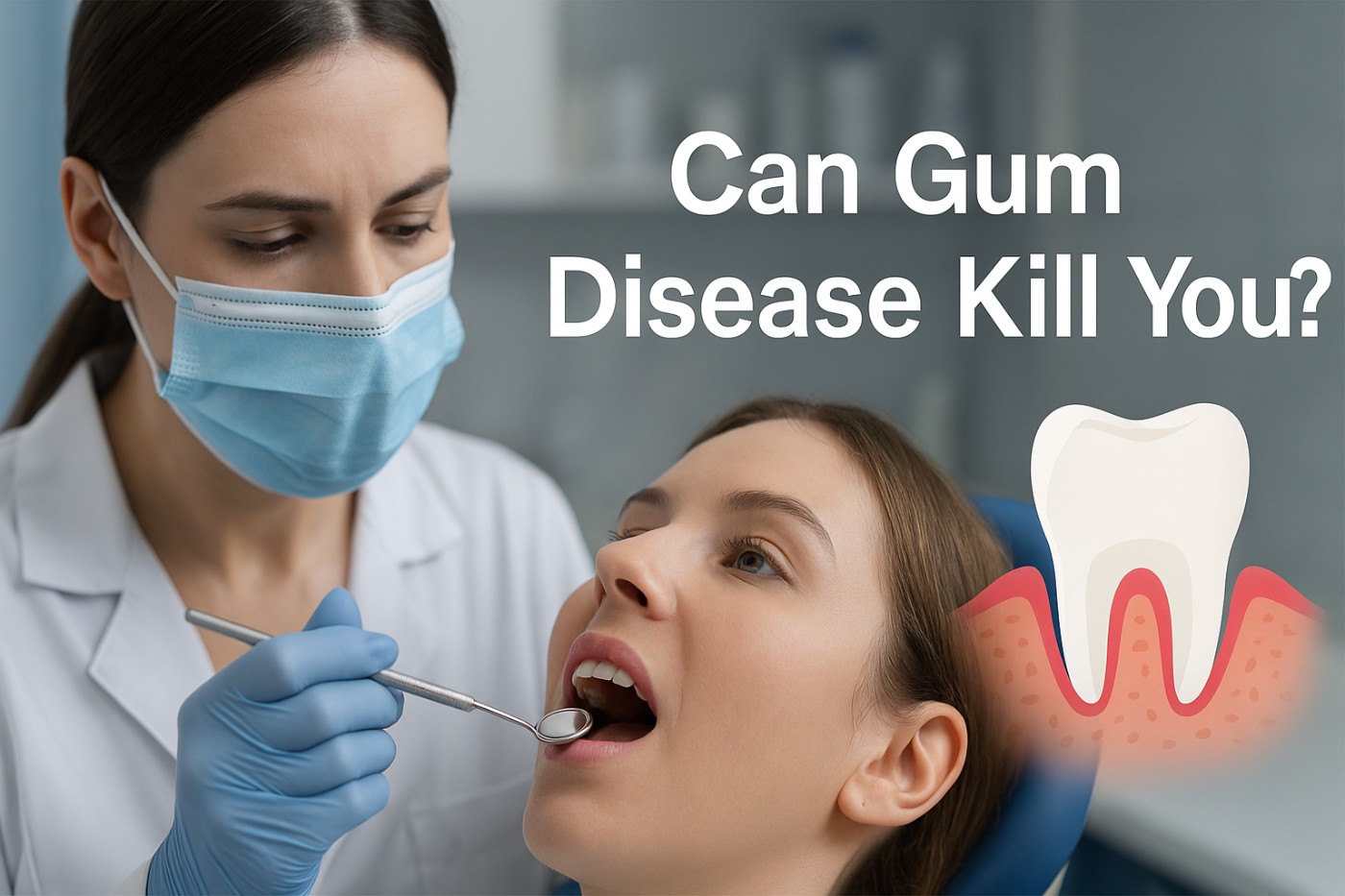
05 Sep Can Gum Disease Kill You? Dentist’s Guide to Periodontal Disease, Symptoms, and Proven Treatments
Why Gum Health Is More Important Than You Think
When most people think of gum disease, they imagine mild bleeding when brushing or occasional bad breath. But what many don’t realize is that untreated gum disease — also known as periodontal disease — can have serious, even life-threatening consequences.
As dentists, we often get this alarming question from patients: “Can gum disease kill you?” The honest answer: Yes, in extreme cases, untreated gum disease can increase your risk of life-threatening conditions.
This guide will explain everything you need to know about periodontal disease, its symptoms, risks, and proven treatments to protect not just your smile — but your overall health.
What Is Gum Disease? (Periodontal Disease Explained)
Gum disease is an infection of the tissues that surround and support your teeth. It usually starts as gingivitis, a mild inflammation of the gums caused by plaque buildup. At this stage, symptoms include swollen gums and occasional bleeding when brushing or flossing, but the bone and connective tissue are not yet affected.
If gingivitis is left untreated, it can progress to periodontitis, a more advanced stage where the infection damages the bone and connective tissue supporting your teeth. This can lead to deep gum pockets, loose teeth, and even tooth loss. The real danger, however, is that the infection does not remain localized to the mouth — bacteria and inflammation can spread to the rest of the body.
Can Gum Disease Kill You? The Hidden Dangers
Yes — indirectly. Gum disease itself doesn’t “kill” you, but its complications can be life-threatening. Let’s look at the main risks:
1. Heart Disease & Stroke: When bacteria from gum infections enter the bloodstream, they can trigger inflammation in your arteries. Over time, this inflammation can contribute to a buildup of plaque in blood vessels, raising your risk for heart attacks and strokes. Studies show that patients with periodontal disease are more likely to experience cardiovascular problems than those with healthy gums.
2. Diabetes Complications: Gum disease and diabetes have a two-way relationship. People with diabetes are more prone to gum infections, and untreated periodontal disease makes it harder to control blood sugar levels. This vicious cycle can worsen diabetes complications such as kidney disease, nerve damage, and vision problems.
3. Respiratory Infections: Bacteria from infected gums can be inhaled into the lungs, especially in people with weakened immunity. This can increase the risk of pneumonia, bronchitis, and other chronic respiratory conditions. For elderly patients or those with existing lung disease, this risk becomes even more serious.
4. Pregnancy Risks: Pregnant women with gum disease face higher risks of complications. Infections and inflammation can trigger preterm labor and lead to low-birthweight babies. Maintaining healthy gums during pregnancy is essential, both for the mother’s overall health and the baby’s safe development.
5. Sepsis (Blood Infection): In rare but severe cases, the bacteria from periodontal infections can spread into the bloodstream and trigger sepsis. Sepsis is a life-threatening immune response that can shut down vital organs if not treated promptly. While uncommon, this highlights how dangerous untreated gum disease can become.
Early Signs and Symptoms of Gum Disease
Recognizing gum disease early can save your smile and health. Watch for these warning signs:
- Red, swollen, or tender gums
- Bleeding while brushing or flossing
- Persistent bad breath (halitosis)
- Receding gums (teeth look longer)
- Loose or shifting teeth
- Pain when chewing
- Pus around gums or teeth
If you notice any of these, schedule a dental appointment immediately.
Periodontal Disease Stages
Periodontal disease doesn’t happen overnight — it develops in stages, starting from mild gum inflammation to severe infection that can damage bone and teeth. Understanding these stages helps patients recognize early warning signs and seek timely treatment. The earlier gum disease is diagnosed, the easier it is to reverse or control.
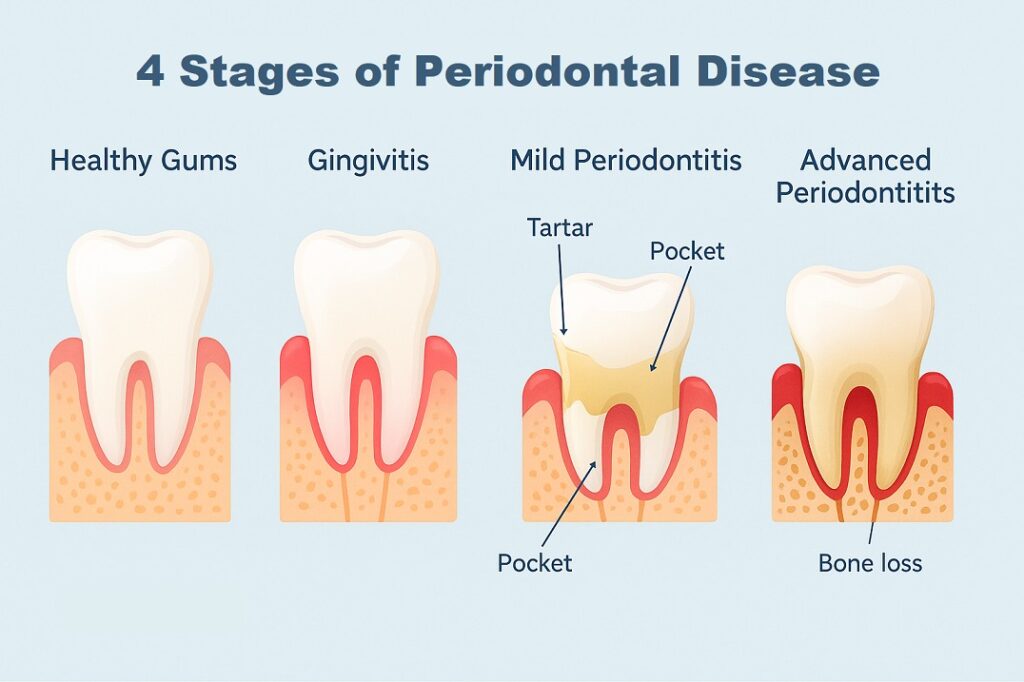
4 Stages of Periodontal Disease
1. Gingivitis (Early Stage)
This is the mildest form of gum disease and usually begins with redness, swelling, and bleeding during brushing or flossing. At this stage, there is no bone damage, and with proper dental cleaning and home care, gingivitis is completely reversible.
2. Mild Periodontitis
If gingivitis is left untreated, it progresses to mild periodontitis, where the infection begins to spread deeper below the gumline. Gums may start to pull away from the teeth, forming small pockets that trap bacteria, and early bone loss may occur.
3. Moderate Periodontitis
At this stage, gum pockets deepen further, leading to more bacteria buildup and greater bone and tissue loss. Patients may experience bad breath, gum recession, and loose teeth, requiring more advanced treatments like scaling, root planing, or antibiotics.
4. Advanced Periodontitis
In the most severe stage, the infection destroys significant bone and connective tissue, causing teeth to become very loose or even fall out. Advanced treatment, including surgery, bone grafts, or tooth replacement options, is usually necessary to restore oral function.
Also Read: Full Mouth Dental Implants
Who Is Most at Risk with Periodontal Disease?
Certain people are more vulnerable to gum disease:
- Smokers and tobacco users
- People with diabetes
- Pregnant women
- Individuals with poor oral hygiene
- Patients with weakened immune systems
- People with a family history of gum disease
When Should I See a Dentist?
If you notice bleeding, swelling, or tenderness in your gums, don’t wait — see a dentist as soon as possible. Early detection is the key to stopping gum disease before it causes long-term damage. At Brookside Dental Arts, Dr. Angra carefully evaluates each patient and, when needed, refers them to trusted specialists for advanced periodontal care.
How Dentists Diagnose Periodontal Disease
1. Examine your gums for swelling, redness, and bleeding: During your check-up, the dentist carefully looks for visible signs of inflammation such as swelling, tenderness, and redness along the gumline. They may gently press the gums to see if bleeding occurs, which is often one of the earliest indicators of gum disease. Early detection at this stage can help stop gum disease from progressing to more severe forms.
2. Measure pocket depths (spaces between teeth and gums): Your dentist uses a small measuring probe to check the depth of the spaces, or “pockets,” between your teeth and gums. Healthy gums usually measure between 1–3 millimeters, while deeper pockets may signal advanced gum disease or bone loss. This step is crucial for determining the severity of periodontal disease and planning the right treatment.
3. Take dental X-rays to check bone loss: Dental X-rays provide a detailed picture of the structures beneath your gums, showing whether infection has already damaged the supporting bone. Bone loss is a clear sign of advanced periodontitis, which requires specialized treatment to prevent tooth loss. Using X-rays also helps dentists monitor changes over time and track the success of your treatment.
4. Review your medical history to identify risk factors: Your dentist will ask about your overall health, lifestyle, and family history to understand factors that may contribute to gum disease. Conditions like diabetes, smoking habits, certain medications, and even genetics can increase your risk. By reviewing your medical history, the dentist ensures that your gum treatment is tailored to your specific needs and health concerns.
Also Read: How Long Do Composite Fillings Last on Front Teeth?
Proven Treatments for Gum Disease
The good news is that gum disease is treatable and preventable, especially when caught early.
- Non-Surgical Treatments
For early-stage gum disease, professional cleaning known as scaling and root planing is often enough. This deep-cleaning procedure removes plaque and tartar from below the gumline and smooths the roots of the teeth to encourage healing. In some cases, dentists may also prescribe antibiotics in the form of gels, rinses, or pills to reduce bacterial infection.
✅Professional Cleaning (Scaling & Root Planing): Removes plaque and tartar buildup below the gumline.
✅Antibiotic Therapy: Local antibiotics or antimicrobial rinses to kill bacteria.
- Surgical Treatments (for Advanced Cases)
When gum disease reaches advanced stages, surgical treatment may be necessary. Flap surgery involves lifting the gums to clean infected tissue and reduce pocket depth. Bone grafts may be used to replace bone lost to infection, while tissue grafts strengthen thin or receding gums. In some cases, dentists use guided tissue regeneration to encourage the regrowth of bone and gum tissue.
✅Flap Surgery: Gums are lifted to remove tartar and reduce pocket depth.
✅Bone Grafts: Replace bone lost to infection.
✅Tissue Grafts: Cover exposed roots and strengthen gums.
✅Guided Tissue Regeneration: Stimulates bone growth.
- Lifestyle & Home Care
Beyond professional treatments, your daily habits are key to keeping gum disease under control. Brushing twice a day with fluoride toothpaste and flossing daily helps remove plaque before it hardens into tartar. Using antimicrobial mouthwash can further reduce bacteria. Avoiding tobacco and eating a nutrient-rich diet with plenty of vitamin C and calcium supports gum healing and strengthens your immune system.
✅Brush twice daily with fluoride toothpaste.
✅Floss daily.
✅Use antimicrobial mouthwash.
✅Quit smoking.
✅Maintain a healthy diet rich in vitamins and minerals.
How to Prevent Gum Disease (Dentist-Recommended Tips)
The best way to avoid serious gum problems is through prevention. Regular dental check-ups every six months allow your dentist to spot gum issues before they become severe. Professional cleanings also remove tartar buildup that daily brushing and flossing can’t reach.
Maintaining a healthy lifestyle is equally important. Quitting smoking, controlling blood sugar levels, and eating a balanced diet all reduce your risk of gum disease. Finally, a strong oral hygiene routine — brushing twice a day, flossing once daily, and rinsing with mouthwash — ensures your gums stay healthy between dental visits.
👉Regular Dental Check-Ups: Visit your dentist every 6 months.
👉Professional Cleanings: Even the best brushing misses tartar buildup.
👉Healthy Lifestyle: Control diabetes, quit smoking, and reduce sugar intake.
👉Oral Hygiene Routine: Brushing, flossing, and rinsing daily.
Gum Disease and Whole-Body Health
From a modern healthcare viewpoint, gum health is directly tied to systemic health. Dentists and medical researchers emphasize the mouth-body connection:
- Gum disease = inflammation → chronic conditions (heart, diabetes, lungs).
- Early treatment not only saves your teeth but lowers long-term medical risks.
This is why gum disease isn’t just a “dental problem” — it’s a whole-body health issue.
Frequently Asked Questions (FAQs)
Q1: Can gum disease kill you really?
Not directly, but untreated gum disease can increase your risk of life-threatening conditions such as heart disease, stroke, and sepsis.
Q2: Is gum disease reversible or reversed?
Yes, early stages like gingivitis are reversible with professional care and good oral hygiene. However, advanced periodontitis can only be managed, not fully reversed.
Q3: How long does gum disease take to progress?
Progression varies from person to person. For some, it may take years, while in others with risk factors like smoking or diabetes, it can advance much faster.
Q4: Does everyone with gum disease lose their teeth?
No, tooth loss can be prevented if gum disease is diagnosed and treated early. Many patients maintain their natural teeth with consistent care.
Q5: Is gum disease curable?
Yes, gingivitis (early gum disease) is curable with professional dental care and better oral hygiene. Advanced periodontitis can’t be cured but can be controlled to protect your teeth.
Q6: What does “early periodontal disease” mean?
It’s the first stage of periodontitis where gum pockets deepen and mild bone loss may start. With early treatment, the damage can often be stopped or reversed.
Q7: How do you treat gum disease?
Treatment includes scaling, root planing, or surgery in severe cases. Daily brushing, flossing, and dental checkups are essential for long-term results.
Q8: Is gum disease contagious?
Yes, gum disease bacteria can spread through saliva and close contact. Good oral hygiene lowers the chances of transmission and infection
Q9: What does gum disease look like?
Gum disease often begins with red, swollen, or tender gums that bleed during brushing or flossing. As it progresses, symptoms may include gum recession, plaque buildup, loose teeth, or pus around the gumline.
Q10: How long can you keep your teeth with periodontal disease?
The answer depends on the stage and severity of the disease. Many patients can keep their natural teeth for life with proper treatment and regular care, but untreated gum disease increases the risk of tooth loss.
A Note from Brookside Dental Arts
One of the challenges with periodontal disease is that it often develops silently, without pain, especially in the early stages. Dr. Angra reminds patients that recognizing the early warning signs — bleeding, swollen, or tender gums — is crucial for getting the right treatment before the disease worsens. Left untreated, gum disease doesn’t just harm your smile — it can affect your heart, lungs, blood sugar levels, and overall health.
If you’re noticing symptoms, don’t ignore them. At Brookside Dental Arts in Pennington, NJ, we’ll help you stop infection, restore gum health, and protect your long-term wellness.
The good news is that gum disease is both preventable and treatable. With the right care — daily oral hygiene, regular dental visits, and early treatment — you can protect your smile and safeguard your overall health.
Care at Brookside Dental Arts
At Brookside Dental Arts, our focus is always on personalized, compassionate care. With years of experience and advanced training, Dr. Angra combines modern techniques with a patient-first approach to slow, manage, and reverse gum disease wherever possible. Whether you need preventive care, nonsurgical treatment, or guidance from a trusted periodontist, you’ll find a supportive team ready to protect your smile and overall health.


Sorry, the comment form is closed at this time.