

31 Dec Full Mouth Dental Implants: Cost, Procedure, Benefits & What to Expect
Full mouth dental implants have become one of the most reliable and life-changing solutions for people who have lost most or all of their natural teeth. Whether due to decay, gum disease, trauma, or long-term denture use, missing teeth can impact your ability to chew, speak, smile, and maintain good oral health. Fortunately, modern implant dentistry offers a stable, long-lasting, and natural-looking solution that restores full function and confidence.
As a trusted Pennington family dentist, Dr. Angra has helped countless patients regain their smiles through personalized, high-quality implant care. With advanced training and experience across multiple states and countries, she delivers comprehensive evaluations and treatment plans tailored to each patient’s unique needs, bone structure, and long-term goals.
This in-depth guide covers everything you should know about full mouth dental implants—including the procedure, benefits, types, candidacy, healing expectations, risks, aftercare, and cost considerations.
What Are Full Mouth Dental Implants?
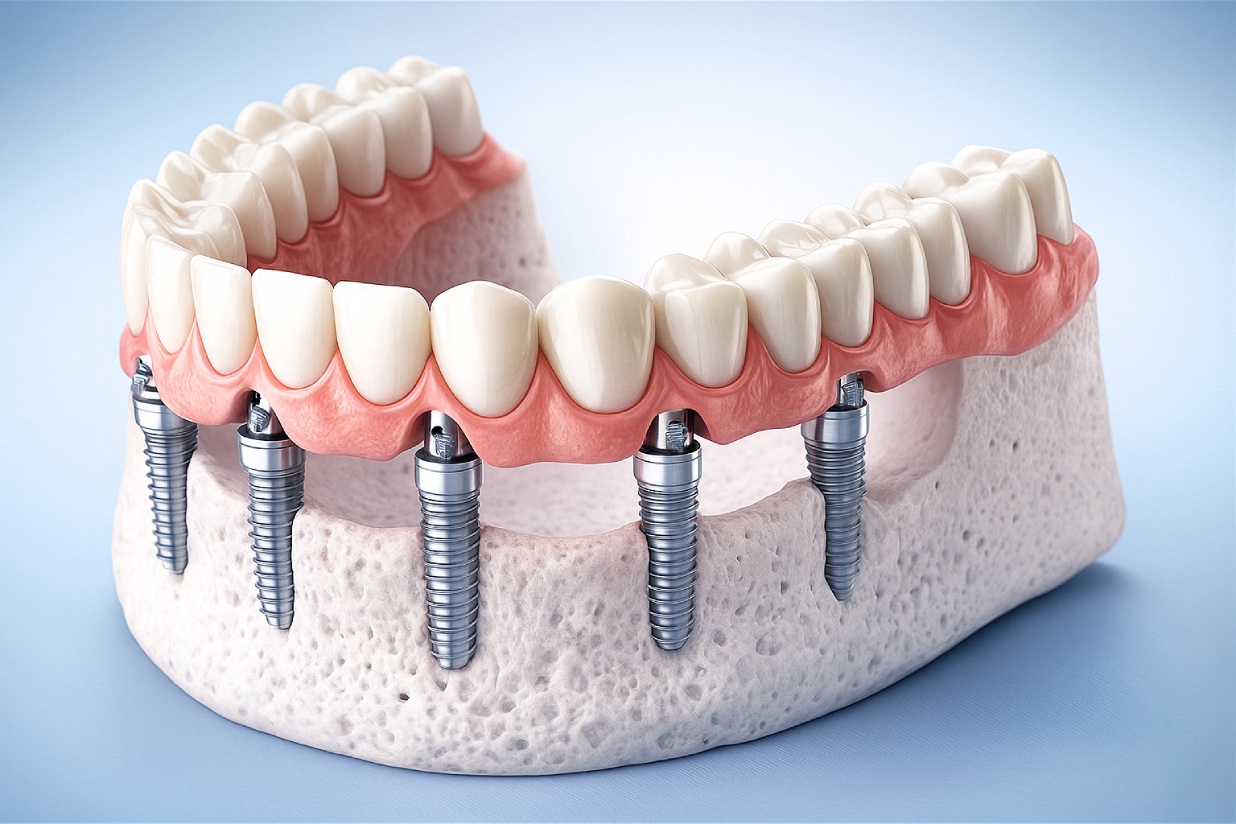
Full mouth dental implants are a permanent tooth-replacement solution used when a patient has lost most or all teeth in the upper or lower arch. Instead of replacing each missing tooth with an individual implant, strategically placed implants support a complete row of teeth.
This approach restores:
- Strong chewing ability
- Stable bite function
- A natural-looking smile
- Jawbone stimulation to prevent bone loss
The treatment typically involves placing 4–6 implants per arch, which act as titanium anchors for a custom bridge or fixed denture.
Why Patients Choose Full Mouth Implants Over Dentures
Traditional dentures rest on the gums and rely on adhesives for stability. Many patients find them uncomfortable, unstable, or difficult to adjust to.
Full mouth implants offer several advantages over dentures:
- No slipping or movement
- No adhesives needed
- Allows you to eat all foods confidently
- Feels and functions like natural teeth
- Preserves jawbone and facial structure
- Long-term stability and durability
For patients seeking a permanent solution to missing teeth, full mouth implants provide unmatched comfort and functionality.
How Full Mouth Dental Implants Work
There are three main components:
1. Implants (Titanium or Zirconia Posts)
These are surgically placed into the jawbone. They act as the new “root” of the tooth.
2. Abutments
These connectors attach the implant posts to the prosthetic teeth.
3. Full Arch Prosthetic (Bridge or Fixed Denture)
A custom-made set of teeth that looks and functions like natural teeth.
Once healed, patients enjoy a secure, natural feel that restores their chewing ability and smile aesthetics.
Types of Full Mouth Dental Implant Options
While different clinics offer branded variations, most full mouth implant systems fall under three main categories. Here is a clear, unbiased breakdown:
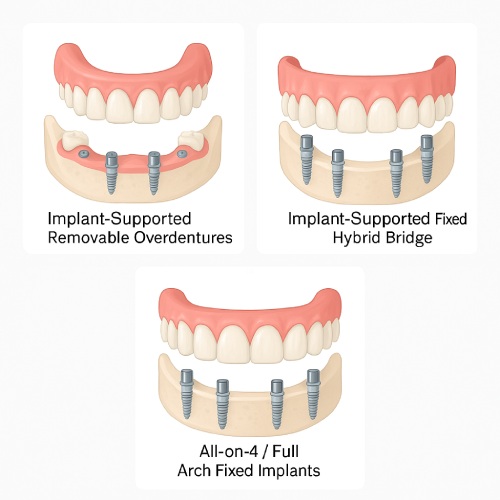
1. Implant-Supported Removable Overdentures
(Comparable to “snap-in dentures”)
- Uses 2–4 implants per arch
- Denture snaps securely onto the implants
- More stable than traditional dentures
- Removable for cleaning
- Budget-friendly option
Best for patients wanting affordability without sacrificing stability.
2. Implant-Supported Fixed Hybrid Bridge
(Non-removable; often used with 4–6 implants)
- Permanently attached to implants
- Does not cover the palate
- Provides strong bite function
- Natural-looking and comfortable
This option is ideal for patients wanting permanent teeth that stay in place 24/7.
3. All-on-4® / Full Arch Fixed Implants
(Used when bone volume is limited)
- Uses 4 strategically angled implants
- Minimizes need for bone grafting
- Allows same-day provisional teeth in many cases
- Excellent long-term stability
A popular choice for patients with significant tooth loss or bone resorption.
Am I a Candidate for Full Mouth Dental Implants?
A comprehensive evaluation with a dentist like Dr. Angra is essential. Candidates typically have:
What to Do
- Multiple missing teeth
- Failing teeth that need removal
- Adequate bone density or grafting options
- Good general health
- Healthy, disease-free gum tissue
- Desire for a long-term, permanent solution
Patients with the following may require additional evaluation:
- Uncontrolled diabetes
- Active gum infection
- Smoking or vaping
- Severe bone loss
- Autoimmune conditions
- Medication-related bone conditions (MRONJ risk)
With careful planning and modern techniques, even complex cases can often be successfully treated.
Also Read: Gum Recession: Causes, Signs, How to Stop It, Surgery & Treatment
The Full Mouth Implant Procedure: Step-by-Step
While every patient is unique, the general process includes the following steps:
1. Comprehensive Consultation
- Digital X-rays
- 3D CBCT scan
- Oral health evaluation
- Bite analysis
- Medical history review
2. Treatment Planning
Your dentist creates a personalized plan based on:.
- Bone structure
- Implant positioning
- Aesthetic goals
- Type of prosthetic teeth
3. Tooth Extractions (if needed)
All failing or damaged teeth are removed.
4. Implant Placement
Implants are placed into the jawbone with precision and accuracy.
5. Temporary Teeth
Many patients receive same-day temporary teeth while the implants heal.
6. Healing & Osseointegration
Implants bond with the bone over 3–6 months.
7. Final Restoration
A beautifully crafted, strong, and natural-looking bridge is secured permanently.
Read Blog: How Long Do Composite Fillings Last on Front Teeth?
Benefits of Full Mouth Dental Implants
Patients experience life-changing improvements:
- Eat confidently (steak, apples, corn, nuts)
- Speak clearly
- Restore facial volume
- No slipping dentures
- Fixed, permanent smile
- Strong bite force
- Reduce jawbone loss
- Boost self-confidence
With proper care, implants can last 20+ years or even a lifetime.
How Long Do Full Mouth Dental Implants Last?
- Implant posts: 20+ years to lifetime
- Prosthetic teeth: 10–15 years on average (may require replacement due to wear)
Longevity depends on factors like:
- Oral hygiene
- Bone quality
- Overall health
- Smoking status
- Routine dental checkups
Healing Timeline & What to Expect
Week 1–2
- Mild swelling
- Soft-food diet
- Follow post-op instructions closely
Month 1–3
- Bone begins integrating with implants
- Adjustments as needed
Month 3–6
- Final prosthetic teeth are placed
After 6 Months
- Fully restored function
- Smile looks and feels natural
Risks & Complications (Rare but Possible)
Every surgical procedure carries some risk. These may include:
- Infection
- Implant failure
- Bone loss
- Gum inflammation
- Bite adjustment issues
Under the care of an experienced dentist like Dr. Angra, risks are carefully minimized through proper planning and follow-up care.
How Much Do Full Mouth Dental Implants Cost?
Costs vary widely based on:
- Number of implants
- Type of restoration
- Need for bone grafting
- Materials used
- Location and expertise
- Lab quality
Most full mouth implant treatments fall into these ranges:
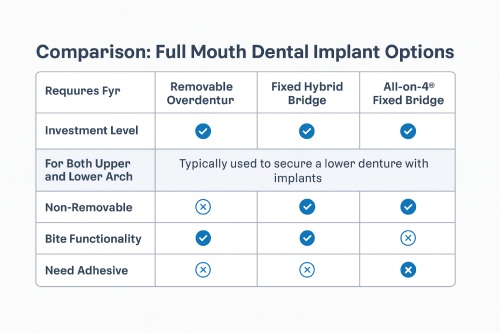
- Removable overdentures: $$
- Fixed hybrid bridge: $$$
- All-on-4 / All-on-6 full arch: $$$$
Dental financing and insurance options may help make treatment more affordable.
Caring for Full Mouth Dental Implants
To maintain long-term results:
- Brush twice a day
- Use floss or interdental tools
- Consider a water flosser
- Attend professional cleanings
- Avoid smoking
- Follow all dentist recommendations
With proper care, your implants can last a lifetime.
FAQ: Full Month Dental Implants
How do full mouth dental implants work?
They use several implant posts to support a fixed or removable set of teeth, restoring full function.
Can you get full implants in one day?
Some patients qualify for same-day provisional teeth, depending on bone condition and treatment plan.
How long do full mouth implants last?
With good care, implants can last decades or longer.
Are full mouth implants removable?
Some types are removable (overdentures), while fixed bridges stay in place permanently.
Can I get implants if I already wear dentures?
Yes. Denture wearers are often excellent candidates.
Are full mouth implants worth it?
Most patients report dramatic improvements in confidence, comfort, and quality of life.
Restoring Your Smile With Experienced Implant Care
Full mouth dental implants offer one of the most transformative solutions for restoring oral health, chewing function, and confidence. At her Pennington practice, Dr. Angra provides personalized implant treatment backed by extensive training, advanced technology, and a compassionate approach to patient care.
If you’re ready to explore full mouth dental implants, schedule a consultation to discover the best solution for your smile and long-term health.
Sorry, the comment form is closed at this time.