

06 Feb What Does a Cavity Look Like? Early vs Advanced Signs Explained With Images
A cavity rarely announces itself with pain in the beginning. Instead, it often starts quietly—changing the look of your tooth long before discomfort appears.
Many patients are surprised when their dentist points out decay they never noticed. That’s because cavities change in appearance as they develop, and the earliest signs can be subtle if you don’t know what to look for.
So, what does a cavity look like, and how can you tell if what you’re seeing is actually tooth decay?
At Brookside Dental Arts in Pennington, NJ, Dr. Angra helps patients identify cavities early—when treatment is simpler and more conservative. This guide explains how a cavity looks at every stage, what symptoms to watch for, and how cavities are treated, so you can protect your smile with confidence..
Understanding What a Cavity Is
A cavity is a permanently damaged area of a tooth caused by decay. It develops when bacteria in plaque produce acids that weaken the tooth’s enamel. Over time, this damage can spread deeper into the tooth if left untreated.Cavities don’t appear overnight, and they don’t always hurt. Their appearance evolves gradually—making early detection critical for preserving your natural tooth structure.
What Does a Cavity Look Like in the Early Stage?
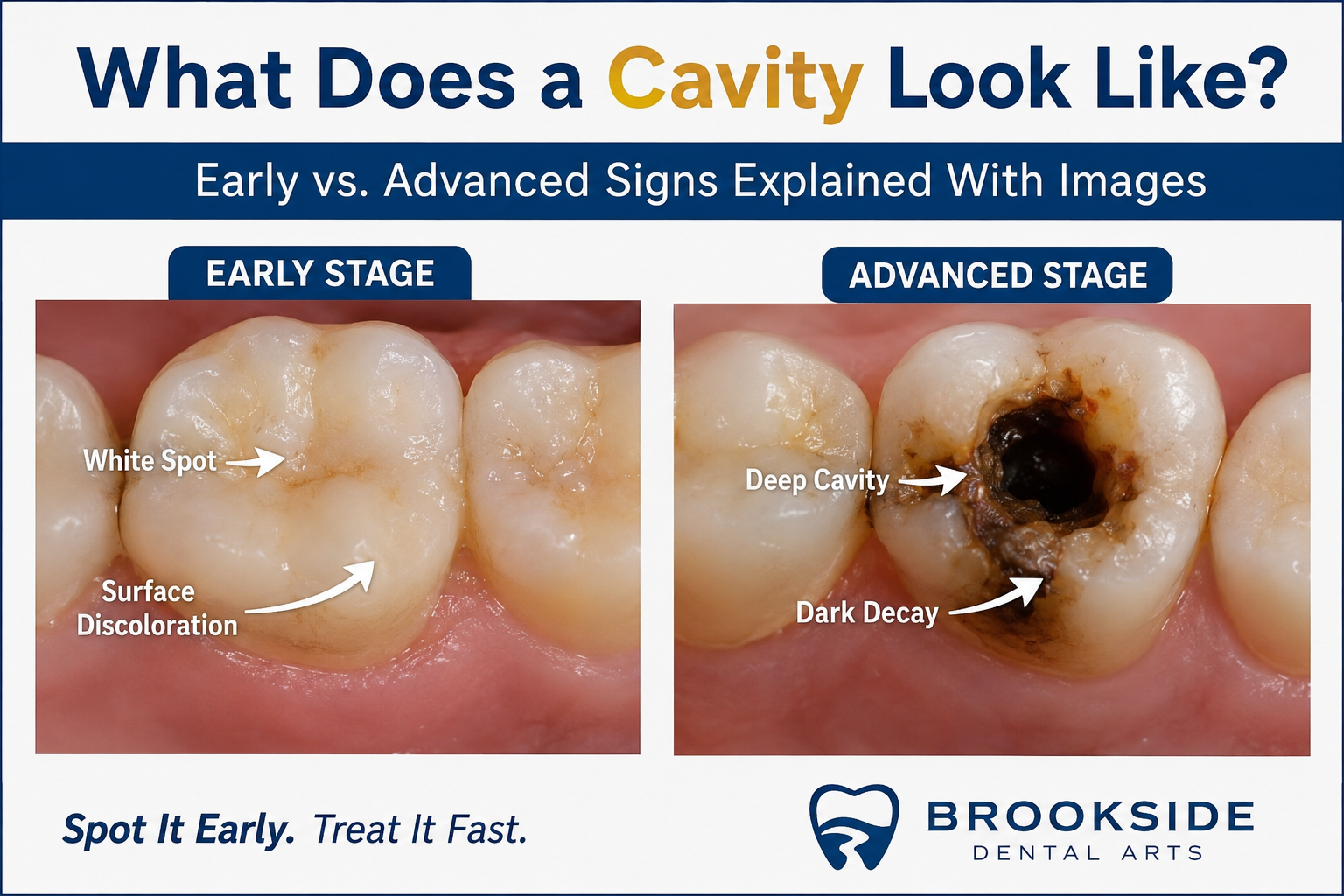
In its earliest form, a cavity doesn’t look like a hole. Many people overlook it entirely.
Early visual signs of a cavity may include:
- Small white or chalky spots on the tooth surface
- A dull area that doesn’t shine like healthy enamel
- Slight roughness when you run your tongue over the tooth
These changes indicate mineral loss in the enamel, often referred to as demineralization. At this stage, the tooth surface is still intact, and professional care can often prevent further damage.
This is one reason routine dental exams are so important—early cavities are much easier to manage.
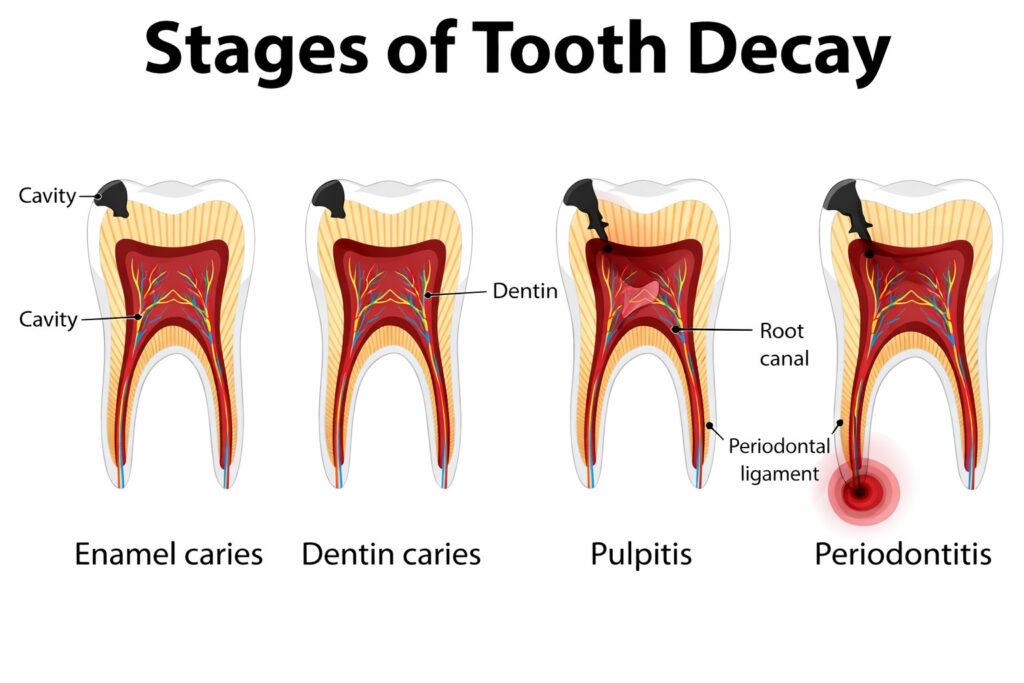
How a Cavity Looks as Tooth Decay Progresses
As decay moves past the enamel and into the dentin layer, changes become more noticeable.
You may start to see:
- Yellow or light brown discoloration
- Small pits or grooves
- A tooth that looks uneven compared to surrounding teeth
At this point, the cavity cannot heal on its own. While pain may still be minimal or absent, treatment is necessary to restore the tooth and prevent further damage.
Patients often ask at this stage whether the discoloration is just a stain or something more serious. A dental exam is the best way to tell.
What Does a Cavity Look Like When It’s Advanced?
An advanced cavity is usually easier to recognize visually, though pain still isn’t guaranteed.
Advanced cavity signs include:
- Dark brown or black areas on the tooth
- A visible hole or opening
- Chipped, fragile, or worn-down edges
At this stage, the tooth structure is significantly weakened. Without treatment, the damage can worsen and compromise the long-term health of the tooth.
Understanding what does a cavity look like at each stage helps patients seek care before extensive treatment becomes necessary.
Cavities That Form Between Teeth
Some cavities develop where you can’t easily see them—between teeth.
Warning signs may include:
- Food repeatedly getting stuck in the same spot
- Sensitivity when flossing
- Dark shadows near the gumline
Dentists rely on digital X-rays and thorough exams to detect these cavities early. They are common and often go unnoticed without professional care.
Also Read: Emergency Wisdom Tooth Removal: When It’s Needed, Procedure, and Recovery
Do Cavities Look Different in Children and Adults?
Yes, cavities can appear differently depending on age.
In children
- Cavities often appear as white or light brown spots
- Baby teeth have thinner enamel, allowing decay to spread faster
- Common on chewing surfaces and between teeth
In adults
- Cavities may look darker due to prolonged mineral loss
- Often form near the gumline or around older restorations
- Progress more slowly but can affect tooth roots
Regardless of age, early detection remains key.
Also Read: Gum Recession: Causes, Signs, How to Stop It, Surgery & Treatment
Symptoms of a Cavity
Cavities don’t always cause immediate discomfort, but symptoms may develop as decay progresses.
Common cavity symptoms include:
- Sensitivity to hot, cold, or sweet foods
- Mild toothache or pressure when biting
- Occasional discomfort that comes and goes
- A lingering bad taste or odor
Importantly, a cavity can exist without symptoms, which is why routine dental visits are essential even if nothing feels wrong.
Visible Signs That May Indicate a Cavity
Signs are what you can see or feel, even without pain.
Signs of tooth decay may include:
- White, chalky areas on enamel
- Yellow, brown, or black discoloration
- Small holes or pits
- Rough or uneven tooth surfaces
If you’re wondering what does a cavity look like, these visible changes are often the clearest clues.
How Cavities Are Treated
Treatment depends on how early the cavity is detected. The goal is always to preserve as much natural tooth structure as possible.
Also Read: How Long Do Composite Fillings Last on Front Teeth?
Treatment options may include:
- Preventive care for early-stage cavities, such as fluoride treatments
- Tooth-colored fillings to restore shape and function
- Protective restorations like crowns for more advanced decay
At Brookside Dental Arts, Dr. Angra evaluates each cavity carefully and recommends personalized treatment based on the tooth’s condition and your overall oral health.
When Should You See a Dentist?
You should schedule a dental visit if you notice:
- New tooth discoloration
- Rough or uneven areas
- Persistent sensitivity
- Changes near the gumline
Cavities don’t always hurt—but they do progress without treatment.
How to Reduce Your Risk of Cavities
Prevention is always easier than restoration.
Helpful habits include:
- Brushing twice daily with fluoride toothpaste
- Flossing once a day
- Limiting sugary snacks and drinks
- Visiting your dentist regularly
These steps significantly reduce the likelihood of developing a cavity.
Expert Dental Care at Brookside Dental Arts
At Brookside Dental Arts in Pennington, NJ, Dr. Angra combines advanced dental technology with compassionate, patient-centered care. Education plays a vital role in prevention—because informed patients make healthier decisions.
Whether you’ve noticed changes in your teeth or simply want reassurance, our team is here to help protect your smile.
Frequently Asked Questions About Cavities
1. What does a cavity look like?
A cavity may appear as a white chalky spot in its early stage, followed by yellow, brown, or black discoloration as it progresses. Advanced cavities may look like visible holes or pits in the tooth.
2. How do you know if you have a cavity?
Some cavities cause sensitivity or mild discomfort, but many have no symptoms at all. A dental exam with X-rays is the most reliable way to detect a cavity early.
3. Are cavities contagious?
Cavities themselves are not contagious, but the bacteria that contribute to tooth decay can be transferred through saliva, especially between caregivers and children.
4. How can you heal cavities in 2 days at home?
Once a cavity forms, it cannot be healed at home. Early enamel damage may be strengthened with professional fluoride care, but established cavities require dental treatment to prevent further damage.
Final Thoughts: Recognizing a Cavity Early Makes All the Difference
Knowing what a cavity looks like gives you the advantage of early action. From subtle white spots to visible dark areas, cavities provide warning signs long before serious damage occurs.
Early care means simpler treatment, healthier teeth, and long-term peace of mind.If you have concerns about a cavity—or want a professional evaluation—Dr. Angra and the team at Brookside Dental Arts are ready to help you maintain a healthy, confident smile.



Sorry, the comment form is closed at this time.