

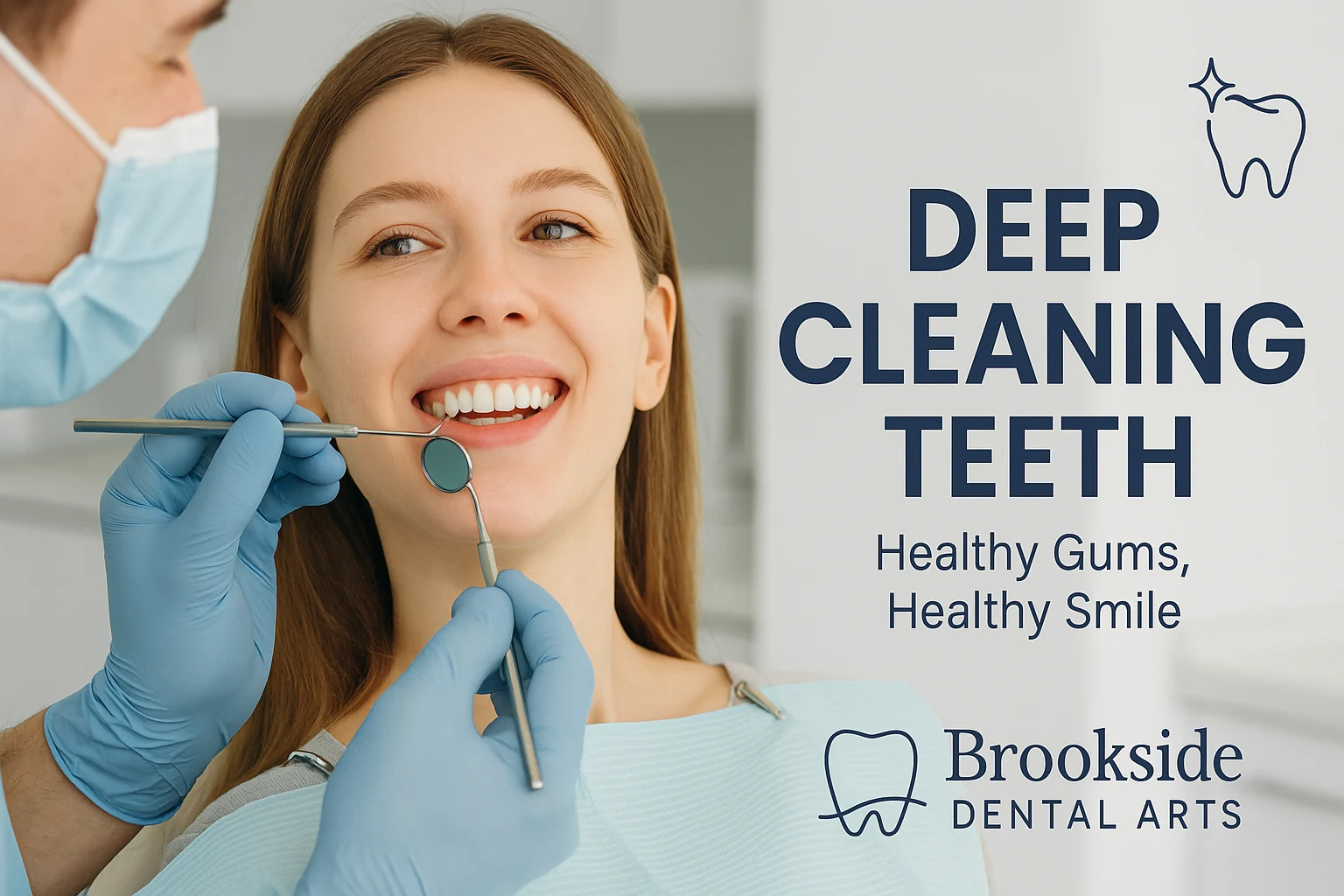
23 Sep Dental Deep Teeth Cleaning: Cost, Procedure, and What to Expect
Healthy gums are the foundation of a healthy smile. While regular dental checkups and cleanings are usually enough to keep teeth and gums in good condition, some situations require more advanced care. One of the most common treatments for gum disease and persistent tartar buildup is deep cleaning teeth, also called deep dental cleaning or gum cleaning at the dentist.
This treatment goes beyond a standard cleaning and plays a vital role in preventing long-term damage to the gums and supporting bone. Understanding what a deep cleaning involves, why it’s recommended, and how the healing process works can help patients feel more comfortable and prepared.
What Is Deep Cleaning of Teeth?
A dental deep cleaning is a non-surgical treatment designed to remove harmful plaque and tartar deposits that have built up below the gumline. Unlike a routine cleaning, which only targets the visible surfaces of the teeth, this procedure addresses the areas where bacteria accumulate and cause gum disease.
The treatment involves two steps:
- Scaling – Carefully removing plaque and hardened tartar from the surfaces of teeth and deep gum pockets.
- Root Planing – Smoothing the tooth roots to make it harder for bacteria to stick and to encourage the gums to reattach firmly to the teeth.
Because the procedure reaches below the gums, local anesthesia is typically used to ensure comfort.
When Is a Deep Dental Cleaning Needed?
Dentists may recommend deep cleaning teeth when signs of gum disease or advanced plaque buildup are present. Some common indicators include:
- Red, swollen, or bleeding gums
- Persistent bad breath that doesn’t improve with brushing or mouthwash
- Gum pockets deeper than 4 millimeters (measured during a dental exam)
- Visible tartar buildup below the gumline
- Bone loss or loose teeth detected on X-rays
In many cases, a deep cleaning is the first line of defense against periodontal disease. Without treatment, gum disease can worsen, causing gum recession, bone deterioration, and even tooth loss.
The Deep Teeth Cleaning Procedure
A gum cleaning at the dentist usually takes place over one or two appointments, depending on the severity of the condition and how many areas of the mouth need treatment.
Step 1: Examination
Your dentist begins with a thorough exam, checking gum pocket depths and reviewing X-rays to determine the extent of plaque and tartar below the gums.
Step 2: Local Anesthesia
To keep you comfortable, the dentist numbs the treatment area with local anesthesia. This makes the procedure virtually painless.
Step 3: Scaling
Special tools, such as ultrasonic scalers with vibrating tips or manual hand instruments, are used to remove plaque and tartar from above and below the gumline. The ultrasonic scaler also sprays a cooling mist of water to wash away debris.
Step 4: Root Planing
After scaling, the roots of the teeth are smoothed. This reduces the chance of bacteria reattaching and gives the gums a chance to heal and tighten around the teeth.
Step 5: Antiseptic Rinse or Medication
In some cases, an antibacterial rinse may be applied to help reduce bacteria and promote healing.
Step 6: Multiple Appointments (if needed)
Because the procedure is detailed and thorough, dentists often divide it into two visits—cleaning one side of the mouth per appointment. This allows for greater precision and comfort.
How Long Does a Deep Teeth Cleaning Take?
The length of treatment varies depending on how advanced the gum disease is and how many teeth need attention.
- Mild cases may take about one to two hours.
- More extensive cases often require two separate appointments, each lasting one to two hours.
- A follow-up visit may be scheduled in a few weeks to evaluate healing.
Patients often ask: how long does a deep cleaning teeth procedure take? The answer depends on the individual’s oral health condition, but most people can expect it to be completed within one to two visits.
Also Read: How Long Do Composite Fillings Last on Front Teeth?
Does Deep Cleaning Teeth Hurt?
With anesthesia, the procedure itself is not painful. Some patients may feel slight pressure while the instruments are being used, but discomfort is minimal.
After the procedure, mild tenderness, swelling, or tooth sensitivity is common. These symptoms usually fade within a few days and can be managed with over-the-counter pain relief and gentle oral care.
Deep Teeth Cleaning Before and After
The difference between gums before and after a deep cleaning can be significant:
- Before: Gums may bleed easily, appear red or puffy, and pockets around the teeth may trap food and bacteria.
- After: Gums look healthier, bleeding is reduced, and teeth feel smoother and cleaner. With time, the gums begin to reattach more closely to the teeth, reducing the risk of infection.

For patients with gingivitis or early gum disease, deep cleaning often prevents the need for more advanced surgical treatments later.
Aftercare and Healing
The success of a deep dental cleaning depends not only on the procedure itself but also on how patients care for their teeth and gums afterward.
✅ Common Aftercare Recommendations:
- Pain relief: Mild discomfort can be managed with acetaminophen or ibuprofen.
- Warm saltwater rinses: These help soothe sore gums and keep the area clean.
- Gentle brushing and flossing: Continue daily hygiene, but be careful around sensitive areas. An electric toothbrush and a Waterpik can be helpful once initial healing has started.
- Diet adjustments: Stick to soft foods for the first day or two. Avoid hard, crunchy, or seed-like foods that may irritate the gums.
- Avoid smoking and alcohol: Both slow down healing and increase the risk of infection.
✅ Healing Time
It’s normal to experience some bleeding or sensitivity for a few days. Within a few weeks, the gums should begin to reattach to the teeth, and overall gum health will improve.
Also Read: Fixing a Cavity on Your Front Tooth: Why Composite Dental Fillings Are the Perfect Choice
Why Is Deep Cleaning Teeth Important?
A deep cleaning dental procedure is the only non-surgical way to treat chronic gum disease. Without it, bacteria continue to grow below the gumline, leading to:
- Gum recession
- Irreversible bone loss
- Loose teeth or tooth loss
- Ongoing bad breath and discomfort
By addressing these problems early, deep cleaning helps preserve natural teeth and prevents the need for more invasive procedures.
After treatment, most dentists recommend regular maintenance cleanings every three to four months. This ongoing care is critical to preventing gum disease from returning.
Dental Deep Cleaning Cost Considerations
The teeth deep cleaning cost can vary depending on several factors, including:
- The severity of gum disease
- How many areas of the mouth require treatment
- The dentist’s location and expertise
- Whether dental insurance covers part of the procedure
Instead of a single flat rate, costs are typically assessed per section (quadrant) of the mouth. Because each patient’s condition is unique, it’s best to discuss personalized treatment and cost estimates directly with your dental provider.
Also Read: What Is a Periodontist? Definition, Types & Difference Between Periodontist vs Dentist
Key Takeaways
- Deep cleaning teeth is a specialized treatment for gum disease, targeting areas below the gumline.
- It involves scaling and root planing to remove tartar and smooth tooth roots.
- The procedure usually requires one to two visits and local anesthesia.
- Healing includes mild soreness but leads to healthier gums and improved oral health.
- Cost depends on individual factors such as the extent of treatment and insurance coverage.
- Regular maintenance after treatment is essential to prevent gum disease from returning.
Gentle and Effective Gum Care at Brookside Dental Arts
Gum health is essential to overall dental wellness. At Brookside Dental Arts, Dr. Angra and his experienced team provide comprehensive care for patients in need of deep dental cleaning or preventive treatments. With a focus on comfort, education, and long-term results, we guide every patient through the process and ensure personalized aftercare.
If you’re experiencing bleeding gums, persistent bad breath, or other signs of gum disease, early treatment can make all the difference.
📞 Contact Brookside Dental Arts today to schedule your consultation and protect your smile for years to come.



Sorry, the comment form is closed at this time.