

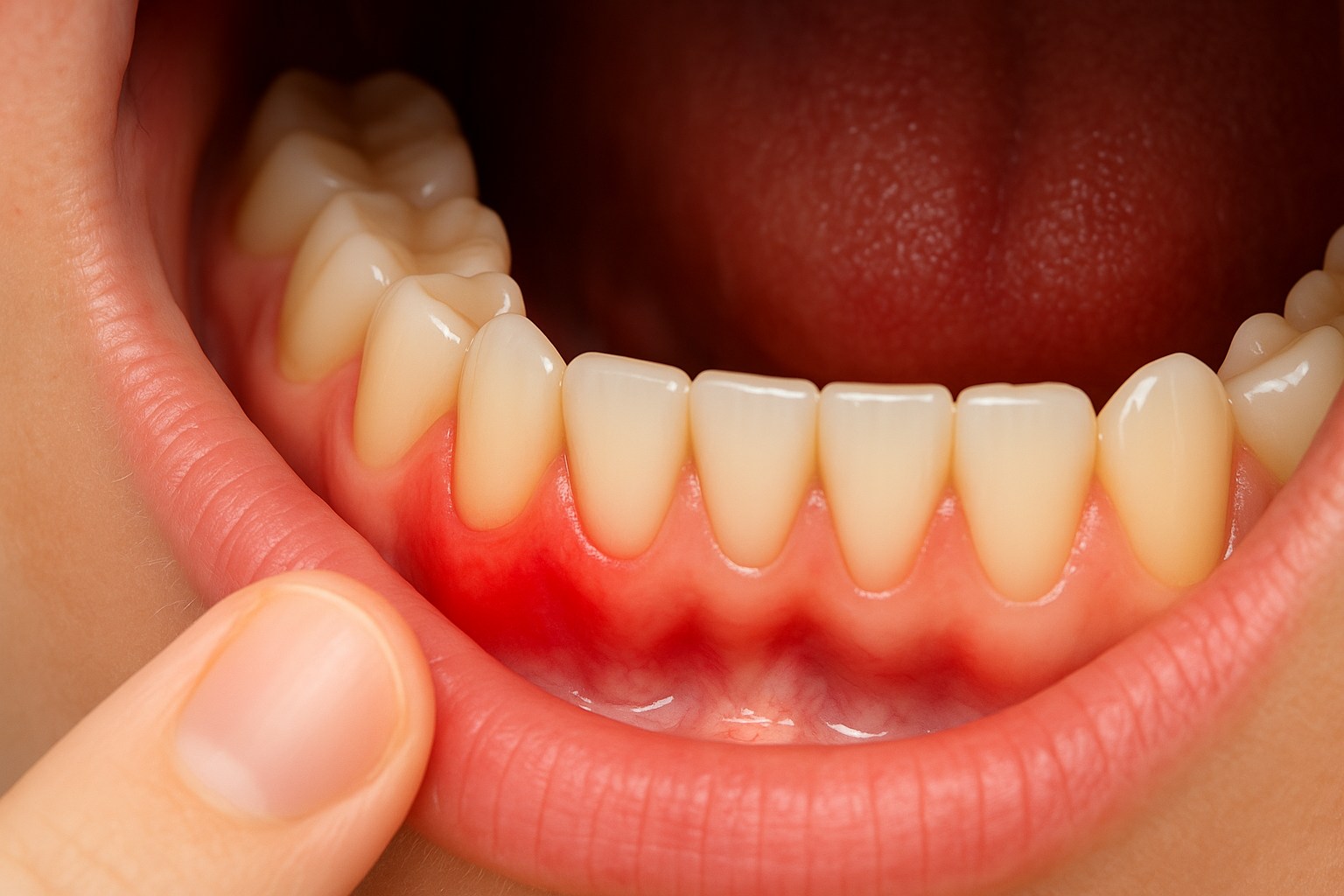
21 Nov Why Do My Gums Hurt? 15 Common Causes & What You Should Do
Gum pain is one of the most common reasons patients contact us at Brookside Dental Arts. Whether it’s a dull ache, sharp pain in one spot, soreness after flossing, or a burning sensation near the back of your mouth, gum discomfort can interfere with daily life—and may signal an underlying dental issue.
As a trusted family dentist in Pennington, NJ, Dr. Angra frequently treats patients experiencing gum pain caused by irritation, infection, inflammation, or emerging wisdom teeth. Understanding why your gums hurt is the first step to protecting your oral health and preventing more serious dental problems.
This guide breaks down the 15 most common causes of gum pain, what symptoms to look for, and when to visit a dentist for professional care.
1. Gingivitis (Early Gum Disease)
Gingivitis is the most common reason gums become red, swollen, and tender. It occurs when plaque builds up along the gumline and causes inflammation.
Symptoms
- Red, puffy gums
- Bleeding when brushing or flossing
- Bad breath
What to Do
Improved home care and a professional dental cleaning can reverse gingivitis in most cases.
2. Periodontitis (Advanced Gum Disease)
If gingivitis is not treated, it can progress into periodontitis—an infection that damages the bone supporting your teeth.
Symptoms
- Gum recession
- Persistent pain
- Loose teeth
- Pus near the gumline
What to Do
Seek prompt treatment. Scaling and root planing (deep cleaning) may be necessary to stop progression.
3. Gum Pain in One Spot
If you’re wondering “Why do my gums hurt in one spot?” it’s often linked to:
- Food particles stuck between teeth
- Early localized infection
- An abscess
- Aggressive brushing
- Canker sores
What to Do
Rinse with warm saltwater, floss gently, and schedule an exam if the pain persists beyond 48 hours.
4. White Spots or White Bumps on the Gums
A white dot on the gum that hurts can indicate:
- A canker sore
- Trauma or irritation
- Oral thrush
- A developing abscess
- A sign of bacterial infection
What to Do
If the white spot is painful for more than 3–5 days or increases in size, see a dentist.
5. Canker Sores (Aphthous Ulcers)
These small, shallow sores often form on the gums and can cause sharp pain when talking, eating, or brushing.
What to Do
Avoid spicy foods, try an OTC numbing gel, and allow the ulcer to heal naturally (usually 7–10 days).
6. Brushing Too Hard
Many people assume brushing harder means cleaner teeth—but it may actually injure your gum tissue.
What to Do
Use a soft-bristle toothbrush and gentle circular motions. Dr. Angra can guide proper brushing techniques during your visit.
7. Gums Hurt After Flossing
If your gums hurt after flossing, it’s often related to improper technique or gums that are inflamed due to inconsistent cleaning habits.
Symptoms
- Soreness along the gumline
- Bleeding during or after flossing
- Tenderness between teeth
- Sensitivity when eating or drinking
What to Do
Floss gently and consistently. Daily flossing helps gums adapt and reduces inflammation. Discomfort typically improves within a week of proper technique.
8. Gums Hurt After Brushing
Pain after brushing usually indicates sensitivity from irritation, inflammation, or brushing too aggressively.
Symptoms
- Sharp tenderness during brushing
- Gumline soreness
- Bleeding gums
- Sensitivity to hot or cold
What to Do
Use a soft-bristle toothbrush and brush with gentle circular motions. Avoid scrubbing the gums, and ensure you’re not using excessive pressure.
9. Wisdom Teeth Irritating the Gums
Emerging or impacted wisdom teeth often cause gum pain in the back of the mouth.
Symptoms
- Pain near the jaw
- Swelling around the back molars
- Difficulty opening the mouth
- Food getting trapped
What to Do
A dental exam is important. Wisdom tooth extraction may be recommended if the tooth is impacted or infected.
10. Gum Abscess (Dental Infection)
A gum abscess is a pocket of infection that forms in the gums, often causing severe pain, swelling, and warmth in the affected area.
Symptoms
- Painful bump on the gums
- Swelling or warmth in one area
- Pus discharge or bad taste
- Throbbing pain
- Fever in severe cases
What to Do
See a dentist immediately. Abscesses require prompt professional treatment to drain the infection and prevent it from spreading.
11. Hormonal Changes
Hormonal fluctuations during pregnancy, puberty, or menopause can increase blood flow to the gums, making them more sensitive or swollen.
Symptoms
- Tender or swollen gums
- Increased bleeding
- Sensitivity while brushing or eating
- Puffy or shiny gum appearance
What to Do
Maintain excellent oral hygiene and continue routine dental cleanings. Inform your dentist about hormonal changes so they can provide tailored care.
12. Vitamin Deficiencies
Lack of essential nutrients—especially Vitamin C and Vitamin B12—can weaken gum tissue and reduce the body’s ability to heal.
Symptoms
- Bleeding gums
- Gum soreness
- Slow healing
- Pale or inflamed gum tissue
What to Do
Incorporate a balanced diet rich in fruits and vegetables, and consult your healthcare provider about supplements if needed.
13. Tobacco Use
Smoking and vaping restrict blood flow to the gum tissue and weaken the body’s immune response, leading to sensitivity and delayed healing.
Symptoms
- Gum tenderness
- Receding gums
- Persistent bad breath
- Slow healing after treatments
- Higher risk of gum disease
What to Do
Quitting tobacco significantly improves gum health and overall oral hygiene. Your dentist can offer strategies and resources to support tobacco cessation.
14. Dry Mouth (Xerostomia)
A lack of adequate saliva allows bacteria to multiply, leading to gum irritation, sensitivity, and a higher risk of decay.
Symptoms
- Sticky or dry feeling in the mouth
- Cracked lips
- Sore or tender gums
- Bad breath
- Difficulty swallowing
What to Do
Stay hydrated, chew sugar-free gum to stimulate saliva, and ask your dentist about products or treatments designed for dry mouth relief.
Also Read: Fixing a Cavity on Your Front Tooth: Why Composite Dental Fillings Are the Perfect Choice
15. Gums Hurt After a Dental Cleaning
After a professional cleaning—especially if you had significant tartar buildup—it is normal to experience mild tenderness for a short period.
Symptoms
- Gum soreness
- Mild sensitivity to hot or cold
- Slight bleeding
- Tenderness when brushing
What to Do
This discomfort usually resolves within 24–48 hours. If pain persists or becomes severe, schedule a follow-up exam to rule out other concerns.
When You Should Consult a Dentist
um pain should never be ignored—especially when it’s persistent or paired with other symptoms. Certain signs indicate that the problem may be more serious and requires prompt dental care.
You should contact a dentist if your gum pain is accompanied by:
- Pain lasting more than 3 days
- Swelling or bleeding
- Fever
- Pus or a bad taste in the mouth
- Receding gums
- Pain while chewing
- Loose teeth
Prompt treatment can prevent serious complications.
Also Read: Gum Recession: Causes, Signs, How to Stop It, Surgery & Treatment
How Dr. Angra at Brookside Dental Arts Can Help
At Brookside Dental Arts, Dr. Angra combines her extensive experience—practicing in Massachusetts, New York, New Jersey, and India—with a compassionate, patient-first approach.
She is dedicated to:
- Accurate diagnosis
- Prevention-focused dental care
- Affordable treatment options
- Helping families in Pennington achieve optimal oral health
As a proud member of the NJDA and ADA, Dr. Angra stays current with the newest dental research and technologies to provide the most comfortable and effective care possible.
Conclusion – Don’t Ignore Gum Pain
Gum pain is never something to overlook. From simple irritation to underlying infection, identifying the cause early keeps your mouth healthy and your smile strong.
If you are experiencing gum pain, swelling, or sensitivity, book an appointment with Dr. Angra. She will work closely with you to diagnose the cause and create a personalized treatment plan to restore your health and comfort.
Sorry, the comment form is closed at this time.