


11 Jun What to Eat After Tooth Extraction: Best & Worst Foods
Tooth extraction is a common dental procedure, whether it’s due to decay, damage, overcrowding, or wisdom teeth removal. While the process itself is typically straightforward, what you eat after tooth extraction can make a huge difference in how well and how quickly you heal. Choosing the right foods will protect the wound, minimize discomfort, and help your body recover.
In this comprehensive guide, we’ll walk you through everything you need to know about what to eat after tooth extraction, the best foods to eat after wisdom tooth extraction, and equally important — what not to eat after tooth extraction.
Why Diet Matters After Tooth Extraction
When a tooth is removed, your gums and surrounding tissues need time to heal. The first 24–48 hours are crucial. During this period:
- A blood clot forms to protect the socket
- The site is sensitive to temperature and pressure
- The risk of dislodging the clot (known as dry socket) is high
Eating the wrong foods can irritate the area, introduce bacteria, delay healing, or even cause complications. So, yes — what is the best food after extracting teeth is more than just a comfort choice; it’s a healing strategy.
Best Foods to Eat After a Tooth Extraction

The First 24 Hours: Stick to Liquids and Soft Foods
Immediately after extraction, especially on the first night after tooth extraction, your focus should be on:
✅ Minimal chewing
✅ Cold or room-temperature foods
✅ Nutrient-rich, soft-textured items
Here’s what to eat after tooth extraction in the first 24 hours:
- Cold Soups (no chunks) – Think chilled tomato, cucumber, or creamy carrot soup.
- Smoothies (without seeds) – Blend bananas, yogurt, and nut butter. Avoid berries with seeds.
- Protein Shakes – Great for nutrition without chewing.
- Apple Sauce – Soothing and easy to swallow.
- Mashed Potatoes – A classic post-extraction meal. Just make sure it’s not hot
👉 Pro Tip: Don’t use a straw. Sucking can dislodge the clot and cause dry socket.
Day 2 to Day 4: Expand to Soft Solids
If healing is on track, you can start introducing more soft foods while avoiding anything that’s crunchy or requires too much effort to chew.
Here’s a list of foods to enjoy between Day 2 and Day 4 after your extraction:
- Oatmeal or Cream of Wheat – Soothing and rich in fiber.
- Scrambled Eggs – Soft, protein-rich, and easy on the mouth.
- Well-Cooked Pasta or Mac & Cheese – Avoid al dente; aim for soft consistency.
- Cottage Cheese or Greek Yogurt – Cool, creamy, and packed with probiotics.
- Avocado – Mashed or in a smoothie, it’s loaded with good fats for healing.
- Soft Steamed Veggies – Carrots, zucchini, or squash, all well-cooked and mashed.
- Hummus – Smooth and nourishing.
If you’re unsure about what to eat during this phase, the goal is to nourish your body without causing any harm. Stick to soft, easy-to-eat, non-acidic, and non-crunchy foods.
Also Read: Gum Graft Surgery
After Day 5: Reintroducing Regular Foods Carefully
Most people start feeling more normal by Day 5 to Day 7, but don’t jump back into chips or steak just yet. Instead, gradually introduce:
- Soft Cooked Rice – Gentle on the gums and provides a filling, easy-to-digest meal.
- Tender Fish (like tilapia or salmon) – Flaky, soft, and full of healing omega-3s.
- Soft Fruits (bananas, ripe peaches) – Sweet, soothing, and rich in vitamins to help you heal.
- Tofu or Soft Lentils – Protein-packed and easy on your sore mouth.
- Pancakes or Soft Bread (no crust) – Soft, fluffy comfort food that’s easy to eat.
These foods will help you gradually return to your regular diet without upsetting your recovery.
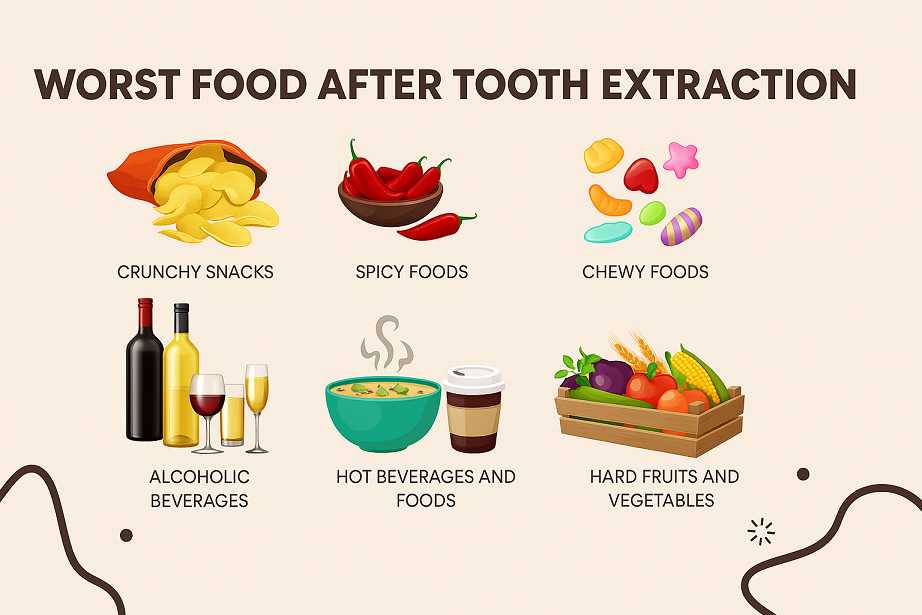
What Not to Eat After Tooth Extraction
This is just as important as knowing what to eat after tooth extraction. The following foods and habits can irritate the site, prolong recovery, or lead to complications like dry socket or infection.
🚫 No Spicy Foods – They can irritate the wound. Spicy foods can cause an uncomfortable burning sensation in the affected area, making your healing process more painful. Avoid hot sauces, chili, and anything with a strong pepper kick to prevent unnecessary irritation.
🚫 No Crunchy or Hard Foods – Chips, nuts, popcorn, toast crust — all are risky. These foods require vigorous chewing and can easily get stuck in the extraction site, increasing your chances of infection. If these foods make contact with the open wound, they could also dislodge the blood clot, which is crucial for healing.
🚫 No Chewy Foods – Bagels, tough meat, or sticky candy can pull on the healing tissues. Chewy items force your jaw to work harder than necessary, putting stress on the extraction area. As your gums are still tender, chewing these foods can potentially cause pain or even re-injury to the surgical site.
🚫 No Carbonated Beverages – The fizz can disturb the clot and increase pain. The carbonation bubbles can cause a sudden discomfort in the extraction site, making it harder for the clot to stay in place. Additionally, the acidity of sodas and sparkling water may irritate the tissues, slowing down your recovery.
🚫 No Alcohol or Smoking – Both delay healing and increase the risk of dry socket. Alcohol can interfere with blood clot formation and the medications prescribed for pain relief. Smoking introduces harmful chemicals and can dramatically extend healing time while increasing the chances of infection or a dry socket, which can be extremely painful.
🚫 No Hot Foods or Drinks – These can dissolve the clot and burn your sensitive tissues. Hot liquids or food may feel soothing in the moment, but they can be too intense for your healing mouth. Even warm tea or soup can exacerbate swelling, and if the clot is dislodged, it could lead to a painful dry socket.
So if you’re asking what not to eat after tooth extraction, the simple rule is: no extremes — nothing too hot, spicy, crunchy, chewy, or acidic.
Best Nutrients for Faster Healing
The body needs fuel to repair itself, and your food choices can either help or hinder the process. Focus on:
- Protein – Helps rebuild tissues (found in eggs, yogurt, soft lentils)
- Vitamin C – Boosts immune response (in mashed kiwi, mango puree)
- Zinc – Aids wound healing (in oatmeal, cottage cheese)
- Omega-3s – Reduce inflammation (in soft salmon, chia pudding)
This is why smoothies, soups, and mashed produce are popular suggestions when someone asks what to eat after wisdom tooth extraction — they pack nutrients without trauma to the mouth.
Also Read: Emergency Wisdom Tooth Removal
A Sample 3-Day Post-Extraction Meal Plan
Day 1
- Breakfast: Protein shake with almond butter
- Lunch: Cold creamy carrot soup
- Dinner: Mashed potatoes with veggie broth
- Snack: Applesauce
Day 2
- Breakfast: Oatmeal with mashed banana
- Lunch: Scrambled eggs with avocado
- Dinner: Soft pasta with pureed peas
- Snack: Greek yogurt
Day 3
- Breakfast: Cottage cheese with ripe peach slices
- Lunch: Steamed fish with mashed sweet potato
- Dinner: Soft rice with lentils
- Snack: Mango smoothie
Tips for Eating After a Tooth Extraction
After a tooth extraction, eating can feel a bit tricky, but following these simple tips can make the process easier and help speed up your recovery:
✅ Opt for Smaller, More Frequent Meals
Instead of tackling large meals, enjoy smaller portions throughout the day. This will give you consistent energy and prevent unnecessary pressure on the healing site.
✅ Chew on the Opposite Side
To avoid disturbing the extraction area, make sure to chew on the side of your mouth that wasn’t treated. This minimizes irritation and ensures the healing site stays undisturbed.
✅ Stay Hydrated, But Avoid Straws
Hydration is key for the healing process, so drink plenty of water throughout the day. Just be sure to skip the straw to avoid the suction that could dislodge the blood clot and lead to a painful dry socket.
✅ Be Gentle with Your Oral Hygiene
While it’s important to keep your mouth clean, avoid brushing the extraction site directly. Gently clean your other teeth and rinse your mouth with a saltwater solution to promote healing without disturbing the wound.
✅ Avoid Extremely Hot or Cold Foods
While it’s tempting to dive into your favorite ice cream or a steaming hot soup, try to steer clear of extreme temperatures. Both hot and cold foods can cause discomfort and may irritate the extraction area.
✅ Rest and Eat Slowly
Give yourself time to rest after eating, and take it slow. Eating too quickly may cause unnecessary stress on the area and disrupt the healing process. Enjoy the process, and savor each bite!
Conclusion
To ensure proper healing after a tooth extraction, it’s crucial to focus on a diet of soft, nutrient-rich foods while avoiding anything that could disrupt the recovery process. Following these guidelines will help protect the extraction site, speed up healing, and reduce discomfort. If you’re uncertain about what to eat after tooth extraction or preparing for a wisdom tooth removal, our dental team is here to guide you through the recovery process and ensure a smooth transition back to regular meals.
Need personalized recovery tips after your tooth extraction?
Contact us at Brookside Dental Arts and book your 📞 post-op consultation with Dr. Angra today.
FREQUENTLY ASKED QUESTIONS (FAQ)
1. What is the safest food to eat after tooth extraction?
Soft foods like mashed potatoes, yogurt, applesauce, and scrambled eggs are safest as they don’t require much chewing.
2. How soon after tooth extraction can I eat?
You can eat after the numbness wears off (about 2-3 hours), but stick to soft foods and avoid hot/spicy items for the first 24 hours
3. How to sleep the first night after tooth extraction?
Sleep with your head elevated to reduce swelling and avoid lying flat. Apply ice intermittently to minimize swelling.
4. Can I brush my teeth after tooth extraction?
Avoid brushing the extraction site for 24 hours but brush other teeth gently and rinse with saltwater.
5. Can I drink coffee or milk after tooth extraction?
Avoid hot coffee as it can irritate the site, but cold milk is fine. Just don’t use a straw.

Sorry, the comment form is closed at this time.